
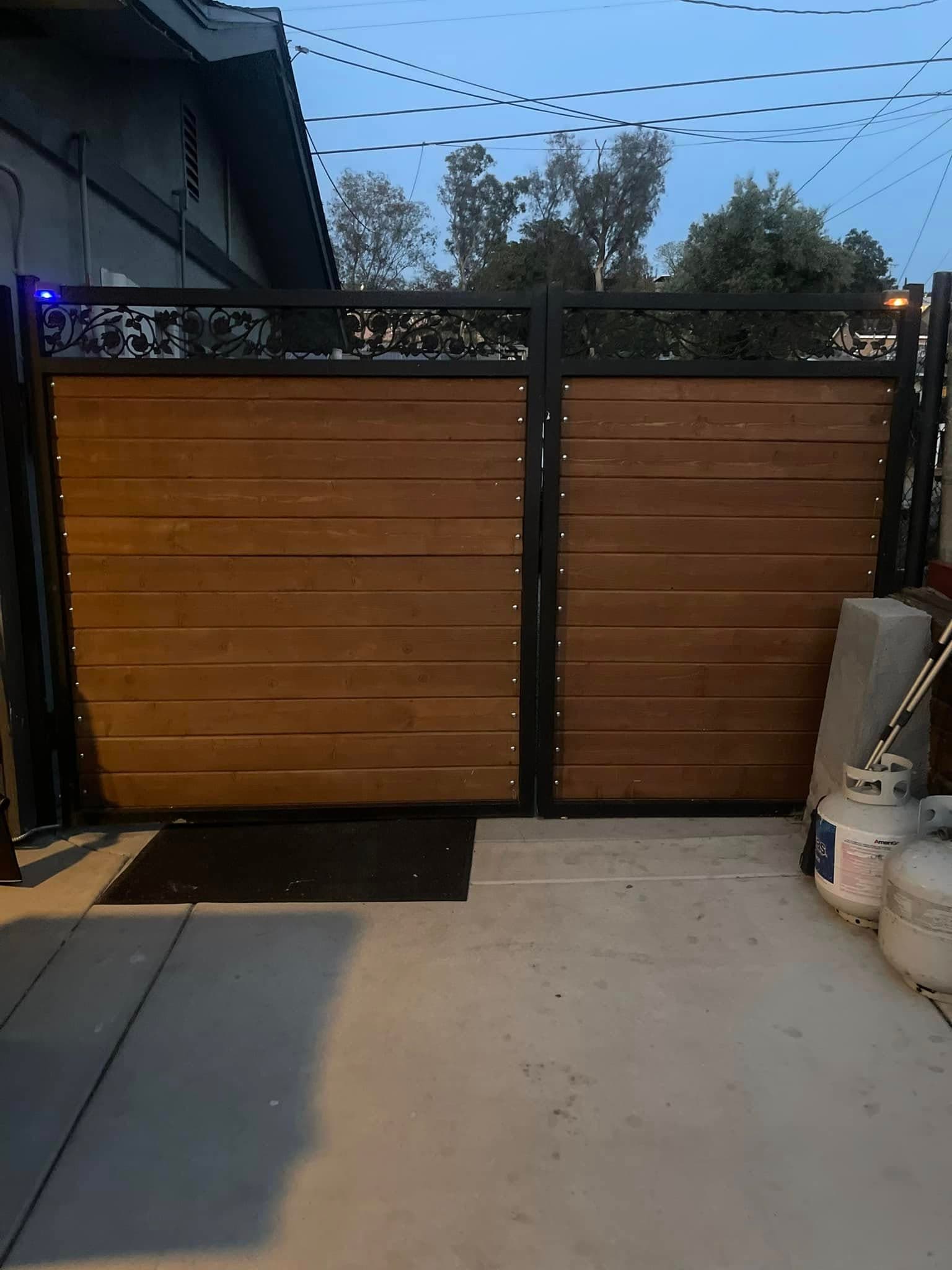
Front-yard fences are different from backyard fences because the job is not only enclosure. It is presentation, visibility, and the first impression of the whole property.
The front edge has to work from the street. That means the material, the openness of the fence, the gate sequence, and the relationship to the driveway and walkway all matter more than they would on a hidden side-yard run.
This is why front-yard fence decisions usually go wrong when the owner thinks only about “security” or only about “curb appeal.” The best frontage materials solve both at the same time, just in different proportions.
Start with what the frontage actually needs to do
Before choosing the material, narrow the real job:
- Does the fence need to define the property line without blocking visibility?
- Does it need to support a gate that becomes part of the front approach?
- Is the goal stronger curb appeal, stronger control, or both?
- Will the fence sit beside masonry, columns, landscaping, or a visible driveway?
- Is the property better served by a decorative frontage than a privacy wall?
The answer shapes the material choice more than trend photos do.
Wrought iron is often the strongest front-yard choice
Wrought iron works well because it keeps the frontage visible while still creating structure, security, and architectural definition. It gives the property a stronger street-facing edge without closing the whole front yard off.
It is a strong fit when the owner wants:
- a more refined frontage
- secure but visible property definition
- a gate sequence that feels deliberate
- something that works with columns, hardscape, or a more formal entry
This is one reason wrought iron fence installation stays such a strong fit for front-yard projects. It usually reads better from the street than a fully closed panel system.
Metal fencing is strong when the owner wants a sharper edge
Metal can work extremely well in front-facing applications when the look should be cleaner and less ornamental than iron. The visual language is often more modern, more disciplined, and less decorative.
Metal front-yard fencing is a good fit for:
- homes with a cleaner architectural style
- properties that need stronger control without heavy visual bulk
- frontages where the owner wants the boundary to feel sharp and durable
The key is proportion. If the panels, posts, and gate are balanced well, metal can feel premium. If they are not, the frontage can start to feel too industrial for a residential setting.
Vinyl can work in the front, but not always
Vinyl can be the right front-yard material when the property needs stronger consistency, lower maintenance, or a cleaner finished edge that ties into side-yard privacy runs. It is not automatically wrong in front-facing applications.
But it is also not always the best answer when the owner wants:
- higher visibility
- stronger architectural detail
- a lighter visual presence from the road
On some homes, vinyl looks too closed or too uniform for the front edge even if it works well on the side and rear. That is why owners comparing vinyl fence installation to a more open frontage system should think beyond maintenance alone.
Height and openness matter as much as material
Many frontage problems come from choosing the right material in the wrong configuration.
A front-yard fence that is too tall or too closed can make the property feel defensive instead of polished. A fence that is too low or too open may fail to define the edge strongly enough.
The better questions are:
- How much of the yard should still feel visible?
- Should the fence frame the front approach or dominate it?
- Is the gate supposed to read as the focal point?
- Will landscaping soften the edge or is the fence doing all the visual work?
Those answers affect the final look just as much as choosing iron, metal, or vinyl.
The gate matters as much as the fence
On a front-yard project, the gate is rarely a minor add-on. It usually becomes the focal point of the whole frontage sequence.
That is why the estimate should think through:
- where the gate sits
- how wide it should be
- whether it belongs in the same material as the fence
- how it works with walkways, driveways, and the front approach
- whether the latch, swing, and daily use pattern are practical
A clean gate can elevate the whole frontage. A weak one can drag the entire project down.
Matching the fence to the house matters
This is the part many buyers miss. The best front-yard fence is not just the “best material.” It is the material that fits the house and the style of the entry.
For example:
- a traditional home may look stronger with wrought iron or a warmer metal detail
- a newer home may respond better to a cleaner metal frontage
- a mixed front-and-side project may justify vinyl in front if consistency matters more than openness
That is why a front-yard fence should be chosen in relation to the whole property, not just the front footage.
Which front-yard fence option makes the most sense?
If the property needs visibility, stronger curb appeal, and a more architectural edge, wrought iron or a well-planned metal system is often the best starting point.
If the owner wants lower maintenance and a more unified enclosure that ties into the rest of the lot, vinyl may still be the right direction.
The best move is to treat the frontage as its own design and function problem. Once the material and gate logic are clear, the rest of the estimate becomes much easier to trust.