Choosing a fence can feel simple until you start comparing materials, heights, styles, maintenance needs, gates, and local installation requirements. The best type of fence for your property is not necessarily the most expensive or the most attractive option in a catalogue.
The right choice is the fence that solves your main problem, suits the conditions around your property, and remains practical to maintain. This guide will help you compare the most common materials and decide which option deserves a closer look.
Quick Answer: Which Fence Is Best for Your Property?
There is no single fence material that is best for every property.
A solid vinyl fence is often the strongest starting point when you want privacy and minimal maintenance. Wood is a good choice when you want natural character, flexible design, and the ability to adjust the fence around an unusual layout.
Aluminum works well when you want an open view, clean appearance, and a secure boundary. Chain link is usually the practical choice when affordable containment matters more than visual privacy.
Ornamental steel may suit a property that needs strength and a more formal appearance. Composite fencing is another low-maintenance privacy option, although it normally requires a higher initial investment.
The best decision depends on six questions:
- What must the fence accomplish?
- How much privacy do you need?
- How much maintenance will you accept?
- What does your property layout allow?
- Which local rules apply?
- What is your realistic project budget?
Fence Options at a Glance
| Fence Material | Best For | Privacy | Maintenance | Relative Upfront Cost | Main Limitation | |---|---|---|---|---|---| | Wood | Custom style and natural privacy | High with solid boards | Moderate to high | Moderate | Requires periodic care | | Vinyl | Low-maintenance privacy | High with solid panels | Low | Moderate to high | Precise installation is important | | Aluminum | Decorative boundaries and open views | Low | Low | Moderate to high | Does not naturally block sightlines | | Chain link | Affordable containment | Low without screening | Low | Low to moderate | Limited privacy and softer curb appeal | | Ornamental steel | Strength and formal appearance | Low | Moderate | High | May require corrosion monitoring | | Composite | Premium privacy with less upkeep | High | Low | High | Greater initial investment |
This table provides a starting point, not a final specification. Fence height, board spacing, gate design, terrain, and installation quality can change how well any material performs.
Start With What You Need the Fence to Do
Many disappointing fence projects begin with a material choice rather than a clear objective. Before comparing colours or panel styles, decide what problem the fence must solve.
A fence can perform several functions, but one or two priorities usually matter most.
Privacy and Noise Control
For privacy, look for a fence with solid or overlapping sections that interrupt sightlines. Wood, vinyl, and composite are the strongest starting options.
A tall fence does not automatically provide complete privacy. The position of neighbouring windows, raised patios, slopes, and changes in ground elevation can affect what remains visible.
Security and Access Control
A security-focused fence should clearly define the boundary and guide people toward a controlled entrance. Height, visibility, gate hardware, spacing, and the ability to climb the fence all matter.
Aluminum and ornamental steel are often selected when owners want a strong visual boundary without closing off the property. Chain link can provide practical perimeter control for larger residential, commercial, and utility areas.
A secure fence can still fail at the gate. Weak hinges, an undersized latch, excessive ground clearance, or poor post support can undermine an otherwise sound installation.
Children and Pet Containment
When children or pets are the priority, examine the complete enclosure rather than the fence material alone:
- Space under the fence
- Gaps between pickets
- Gate-latch height
- Areas that can be climbed
- Soft soil where a dog may dig
- Corners where panels meet
- Openings created by changes in ground level
For an active or determined dog, a taller fence may help, but height is only part of the solution. The fence also needs suitable spacing, secure gates, and a lower edge that works with the animal's behaviour.
Property Boundaries and Curb Appeal
A front-yard fence often serves a different purpose from a backyard fence. It may be intended to define the property, protect landscaping, improve the approach to the home, or separate pedestrians from a driveway.
Open aluminum, ornamental metal, picket-style vinyl, and decorative wood can preserve visibility while creating a clear boundary.
Before treating an existing fence line as the legal boundary, verify the relevant records. An old fence may have been installed for convenience rather than placed exactly on a surveyed line.
What Factors Should You Consider Before Choosing a Fence?
The same fence can perform well on one property and poorly on another. Site conditions and ownership requirements should be evaluated before the material is finalised.
Your Upfront Budget and Long-Term Costs
The lowest initial price is not always the lowest long-term cost. Ongoing expenses can include:
- Painting or staining
- Replacement boards
- Rust treatment
- Gate adjustments
- Vegetation control
- More frequent repairs
Ask for estimates that clearly describe the material, posts, hardware, gates, removal work, and site preparation. Two proposals that appear to cover the same fence may include very different specifications.
The Amount of Maintenance You Can Accept
Wood offers warmth and design flexibility, but it generally needs more attention than vinyl or aluminum. Vinyl normally needs routine cleaning rather than painting or staining. Chain link requires little surface care, but vegetation can become intertwined with the mesh and damaged posts should be addressed promptly.
The best low-maintenance fence is the one that can tolerate the property's conditions without requiring care you are unlikely to provide.
Climate, Wind, Soil, and Property Slope
Solid panels receive more wind pressure than open fences. A site exposed to strong wind may require careful attention to post spacing, post depth, foundations, panel design, and drainage.
Sloped properties require a decision between stepped and racked installation. The correct method depends on the material, the degree of slope, the desired appearance, and the need to limit openings under the fence.
Fence Height, Permits, and HOA Requirements
Do not assume you can install the same height around every part of the property. Front, side, and rear yards may have different requirements. A homeowners association may regulate:
- Approved materials
- Colours
- Finished side orientation
- Maximum height
- Setbacks
- Gate style and placement
- Application procedures
Check these requirements before ordering materials or scheduling installation.
Gate Placement and Property Access
Think about how people, equipment, deliveries, and maintenance crews will move through the property. A narrow pedestrian gate may handle everyday use but fail when you need to move a mower, trailer, waste bin, or construction equipment.
On sloped ground, the gate may strike the surface if the swing direction and ground clearance are not planned carefully.
Comparing the Most Popular Fence Materials
Wood Fence: Best for Custom Style and Natural Privacy
Wood remains a practical choice when you want a fence that can be adapted to the property. It can be built in solid privacy, board-on-board, shadowbox, picket, horizontal, and decorative designs.
Wood fencing is a strong candidate when you want natural appearance, custom height or spacing, a painted or stained finish, solid backyard privacy, or easier replacement of individual boards.
Its main limitation is maintenance. Sun, moisture, soil contact, insects, and movement can affect boards, rails, and posts over time. Choose wood when customisation and appearance justify the recurring care.
Vinyl Fence: Best for Low-Maintenance Privacy
A solid vinyl fence is one of the strongest options when you want privacy without regular painting or staining. It is especially useful for owners who want strong visual screening, consistent colour, and no recurring stain or paint schedule.
The installation must be accurate. Poor alignment, inadequate post support, or incorrect allowances for the site can affect panel appearance and gate operation.
Aluminum Fence: Best for Open Views and Decorative Security
Aluminum fencing is well suited to properties where the boundary should remain visible rather than become a solid wall. It is commonly considered for front yards, landscaped areas, pool surroundings, and properties with attractive views.
Its limitation is privacy. Standard aluminum pickets leave open sightlines, so it is not the first choice for a secluded backyard unless combined with landscaping or another screening strategy.
Chain-Link Fence: Best for Economical Containment
Chain link fencing is a practical material when you need to enclose a larger area without paying for solid decorative panels. It works well for dog runs, side yards, utility areas, commercial perimeters, and large residential lots.
Privacy slats or screening can be added, although these additions change wind exposure and should be considered in the design. Chain link is not the strongest choice when full privacy or a premium residential appearance is the main objective.
Ornamental Steel Fence: Best for Strength and Formal Curb Appeal
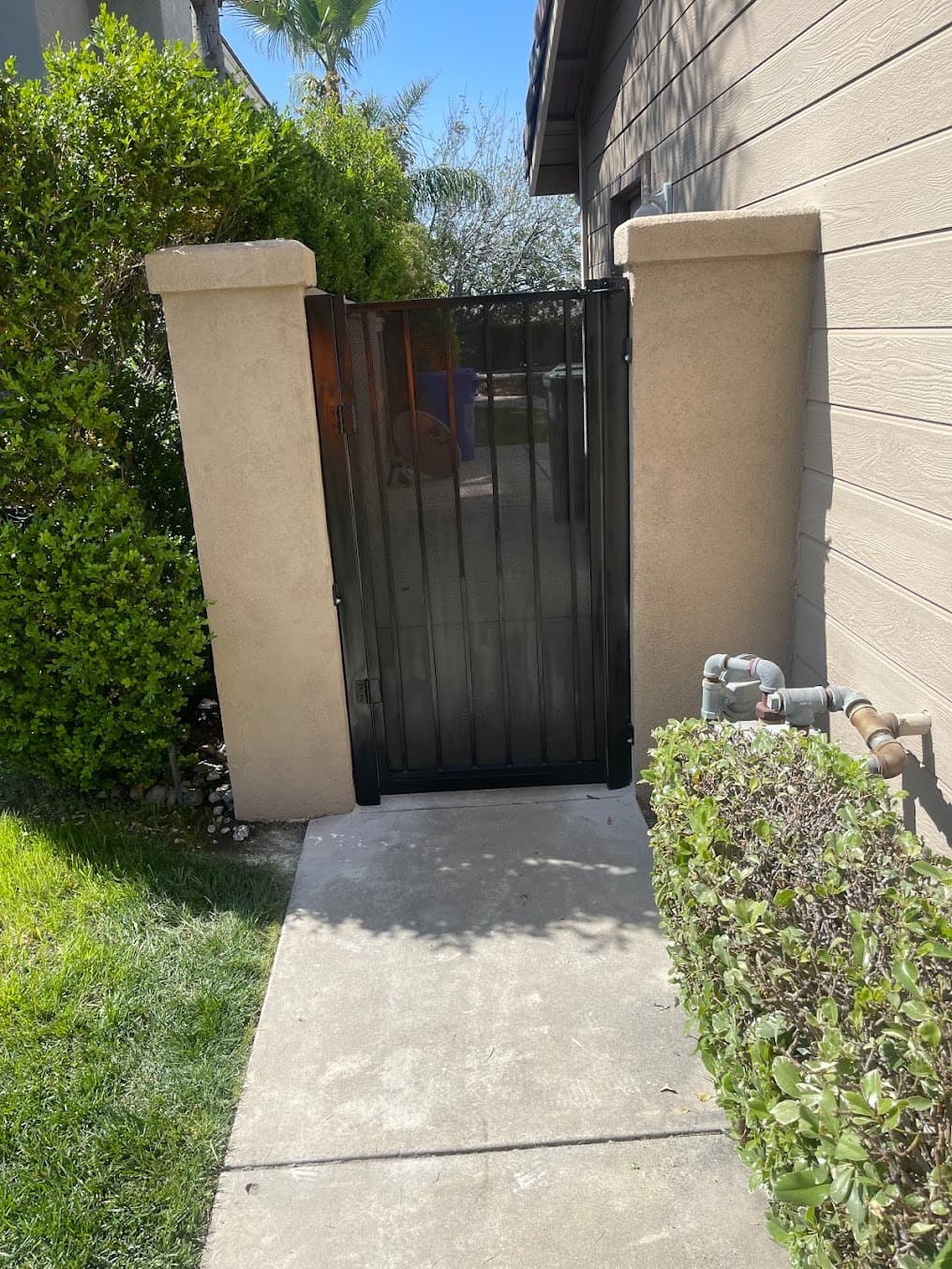
Ornamental steel creates a more substantial, formal boundary. It can suit entry areas, high-visibility frontages, and properties where strength and architectural presence matter.
Steel may require more corrosion monitoring than aluminum and provides little natural privacy unless combined with masonry, landscaping, or separate screening.
Composite Fence: Best for Premium Low-Maintenance Design
Composite fencing can provide the visual weight and privacy associated with wood while reducing some recurring finish maintenance. The primary obstacle is normally the upfront investment, so product construction, warranty terms, and installation requirements should be reviewed carefully.
Which Fence Is Best for Different Property Goals?
Best Fence for Privacy
Start with solid vinyl, board-on-board wood, or solid composite. Vinyl is a strong choice when low maintenance is important. Wood is useful when the layout requires customisation or you want a natural finish.
Evaluate the surrounding elevation before choosing the height. A fence that blocks a ground-level view may not screen an elevated deck or neighbouring upper-storey window.
Best Fence for Dogs and Children
The best fence is a physical enclosure with appropriate height, secure gates, limited openings, and minimal space underneath. Solid wood and vinyl can reduce visual stimulation for dogs that react to activity outside the yard.
Best Fence for Low Maintenance
Vinyl and aluminum are usually the first materials to compare. Vinyl suits owners who want a solid privacy barrier. Aluminum is better when an open, decorative boundary is acceptable. Low maintenance does not mean no inspection — gates, latches, hinges, and posts should still be checked periodically.
Best Fence for a Limited Budget
Chain link is often the most practical choice for enclosing a large area economically. A straightforward wood design may also provide good value when privacy is required. Do not reduce the specification at critical structural points simply to lower the estimate.
Best Fence for a Front Yard
A front-yard fence should complement the building without making the entrance feel unnecessarily closed. Good starting options include decorative aluminum, ornamental metal, picket-style vinyl, low wood pickets, or mixed masonry and metal designs.
Best Fence for a Commercial Property
Chain link may suit economical perimeter control. Ornamental steel or aluminum may be more appropriate for a customer-facing entrance. Properties protecting equipment or restricted areas may need a more security-focused system with controlled gates and carefully selected hardware.
Best Fence for a Sloped Property
Wood is highly adaptable because individual components can often follow or step with the terrain. Some aluminum and vinyl systems can rack to follow a slope, but the allowable adjustment depends on the product. Chain link can also follow changing ground effectively when installed correctly.
Do Not Overlook the Gate
A gate is one of the most frequently used and mechanically stressed parts of a fence. A good gate plan considers:
- Opening width and daily traffic
- Vehicle and equipment access
- Swing direction and surface slope
- Latch location and hinge capacity
- Post support and child or pet security
A large gate places more load on its supporting posts than a standard fence panel. Building it from a heavy material without adequate support can lead to sagging, dragging, latch misalignment, and recurring adjustment.
Common Mistakes When Choosing a Fence
Choosing by appearance alone. A fence can look excellent in a photograph and still be unsuitable for your maintenance tolerance, terrain, or privacy needs. Start with function. Use style to refine the options that remain.
Ignoring the finished side. Local rules, neighbour expectations, and property appearance may influence which direction the finished side must face. Discuss this before installation begins.
Assuming the old fence marks the boundary. An existing fence line is not automatic proof of the legal property boundary. Where the line is uncertain, obtain appropriate records or professional surveying advice before replacing the fence.
Forgetting utilities. Post excavation can conflict with underground services. Required utility-location procedures should be completed before digging begins.
Underplanning the gate. Confirm what must pass through every opening now and what may need access later.
Ignoring drainage and soil movement. Water collecting around posts can shorten the life of some components. The installation plan should work with the site rather than treating the ground as perfectly flat and stable.
Comparing estimates by total price alone. Ask what each proposal includes — material type and grade, post specification, gate size, hardware, removal, disposal, site preparation, permit responsibilities, and warranty terms. A lower total can reflect a different scope rather than a better price for the same project.
What Can You Check Before Calling a Fence Professional?
Walk the proposed fence line and note trees and large roots, irrigation lines, retaining walls, changes in elevation, narrow access areas, existing posts or concrete, utility equipment, drainage paths, structures near the boundary, and areas requiring gates.
Take photographs from several directions. Write down your priorities in order, for example:
- Keep the dog enclosed
- Block the view from the street
- Minimise maintenance
- Keep the project within a defined range
- Preserve access for landscaping equipment
This prevents appearance alone from taking control of the decision.
When Should You Use Professional Fence Installation?
Speak with a qualified fence contractor when the project involves an uncertain property line, a pool or controlled-access area, large driveway gates, retaining walls, significant slope, heavy solid panels, commercial security, permit uncertainty, extensive post failure, or a complete replacement.
Professional input is also valuable when two materials appear equally suitable. A site review can reveal differences in access, soil, slope, wind exposure, and gate layout that are not obvious from a material brochure.
Property owners planning fence installation in Ontario, CA should also consider the requirements that apply to the specific property, placement, height, and intended use before finalising the design.
What Information Should You Prepare for a Fence Estimate?
You do not need a complete technical specification before contacting a fence company. However, a few details will help:
- Property address and residential or commercial use
- Main reason for the fence
- Approximate fence length and preferred height
- Material preference, if any
- Number and approximate width of gates
- Existing fence-removal needs
- Known slope or access issues
- Relevant HOA information
- Photographs of the fence line
It is acceptable to say that you are unsure about the material. A useful estimate process should help you compare suitable options rather than require you to make every decision beforehand.
Frequently Asked Questions
What is the best all-around fence for a home?
Vinyl is a strong all-around option for homeowners who want privacy, a clean appearance, and limited routine maintenance. Wood may be more appropriate for a highly customised layout. Aluminum may be better when preserving the view matters more than privacy.
Which type of fence lasts with the least maintenance?
Vinyl and aluminum are normally among the first materials to compare when low maintenance is the priority. Gate hardware, post movement, impact damage, and ground changes can affect any system, so periodic inspection still matters.
What is the best fence for complete backyard privacy?
A solid vinyl, board-on-board wood, or solid composite fence is generally the strongest starting point. The correct height depends on surrounding elevations, local restrictions, and where privacy is needed.
What fence is best for dogs?
The best dog fence has suitable height, secure gates, limited openings, and minimal space at the ground. Solid wood or vinyl can reduce visibility outside the yard. Chain link provides economical containment but may not suit a dog that climbs or digs.
Do I need a permit to install a fence?
Permit requirements depend on the jurisdiction, fence height, location, property type, and intended use. HOA approval may be separate from municipal permission. Check both before ordering materials or beginning excavation.
Should I repair my old fence or replace it?
Repair may be practical when the damage is limited to a few boards or sections and the main posts remain stable. Replacement deserves consideration when multiple posts are failing, large sections are deteriorated, or repeated repairs no longer provide dependable performance.
Choose a Fence That Works for the Whole Property
The best fence is not simply the material with the longest list of benefits. It is the system that fits the property's purpose, layout, access, maintenance expectations, appearance, and local requirements.
Begin by deciding what the fence must do. Then compare materials according to the conditions that will affect the finished project.
Before construction begins, confirm the fence line, applicable rules, gate requirements, terrain, and installation scope. A careful decision at the planning stage can prevent years of inconvenience, repair, and unnecessary expense.
Ready to compare your options? Contact Empire Fence with your property details, photos, and priorities and we will help you find the right fit.