
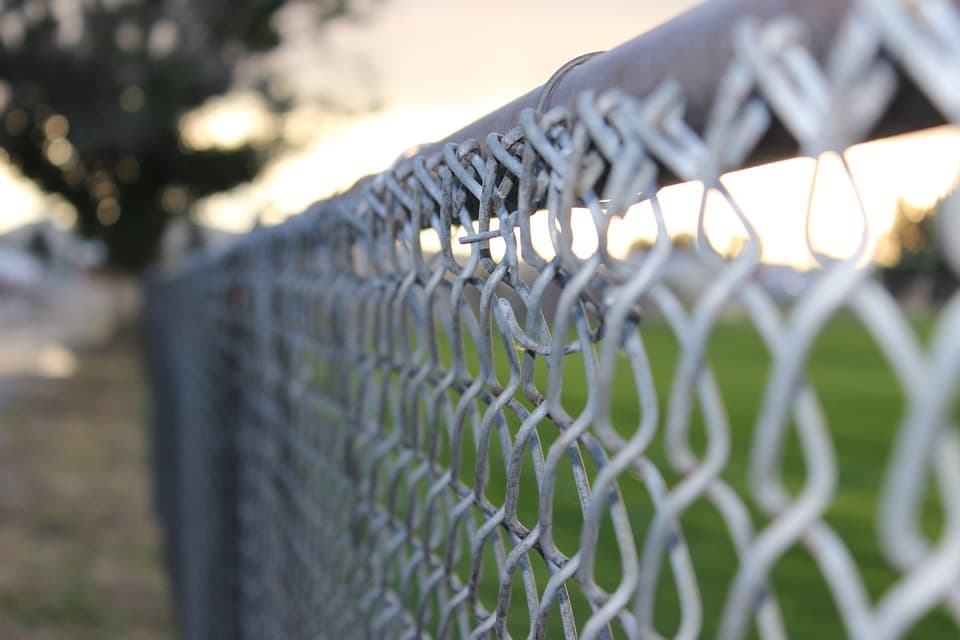
Chain link is often treated like a commercial-only product, but that is too narrow.
It works well on both homes and businesses because the real value of chain link is not the property type. It is the job the fence needs to do: enclose space, stay practical, keep visibility, and cover footage efficiently.
The better question is not “Is chain link residential or commercial?” The better question is “Does this site need a fence that prioritizes function, coverage, and long-run value over decorative finish?”
Why chain link stays relevant
Chain link continues to work because it solves several practical problems at once:
- it encloses space clearly
- it keeps sightlines open
- it handles larger runs efficiently
- it supports gates well
- it is usually more cost-conscious than heavier decorative systems
Those are useful advantages on both a backyard and a business perimeter. That is why chain link fence installation remains one of the most versatile service paths on the site.
On homes, chain link is usually about practical enclosure
Residential chain link is often chosen for:
- backyard and side-yard enclosure
- pet-safe fencing
- larger lots
- utility areas
- owners who value function more than decorative finish
It is a smart residential material when the project needs coverage, visibility, and value without pretending to be a formal frontage fence.
This makes it especially useful when the owner cares about:
- keeping dogs or kids in the yard
- separating side-yard or rear-lot areas
- fencing a larger section without overspending
- maintaining sightlines across the property
For many homes, chain link is not the dream aesthetic choice. It is the practical decision that solves the actual use problem cleanly.
On businesses, chain link is usually about perimeter control
Commercial chain link is often the better answer for:
- storage and service yards
- warehouse and industrial edges
- access control around active sites
- larger security perimeters
- business properties that need durable separation without decorative overbuild
The commercial advantage is that chain link covers space efficiently and supports gates well. It can also be easier to phase on larger sites where the priority is enclosure first and design second.
The biggest difference is not the material - it is the expectation
Homeowners and business owners usually want different outcomes from the same material.
Residential buyers often expect:
- clean enclosure
- pet or family practicality
- simple maintenance
- enough security without making the property feel severe
Commercial buyers often expect:
- perimeter control
- durable access points
- visibility for monitoring the site
- a more straightforward security-oriented layout
The chain link itself is not fundamentally different. The layout, gate logic, and performance expectations are.
Where chain link is the strongest fit
Chain link usually makes the most sense when the project needs:
- secure enclosure
- visibility through the perimeter
- practical long-run coverage
- straightforward gate planning
- a material that handles both residential and commercial logic well
It is especially strong on larger lots, working properties, utility zones, and secondary fence runs that do not need to act like decorative frontage.
Where chain link is not the best answer
Chain link can be the wrong fit when the owner actually wants:
- strong privacy
- a softer residential finish
- decorative curb appeal
- a more formal front-facing edge
In those cases, vinyl fence installation, wood fence installation, or metal fence installation may be more appropriate depending on the property.
Gates matter on chain link projects too
One reason chain link performs well across so many property types is that it works well with gates. But that does not mean gates can be treated casually.
The estimate should still account for:
- width of the opening
- daily traffic pattern
- pedestrian versus vehicle use
- how often the gate will open and close
- whether access control matters more than speed or simplicity
A chain link run with the wrong gate plan can still feel weak even if the fence footage itself is fine.
So which side is chain link better for?
Neither. It is better for the sites that need the strengths chain link actually offers.
That means homes where function matters more than decorative finish and businesses where perimeter coverage, visibility, and practical security matter more than a heavier or more expensive system.
If the project needs clean, efficient enclosure, chain link belongs in the conversation for both property types. The site use should decide the answer, not the assumption that chain link belongs only on commercial land.