
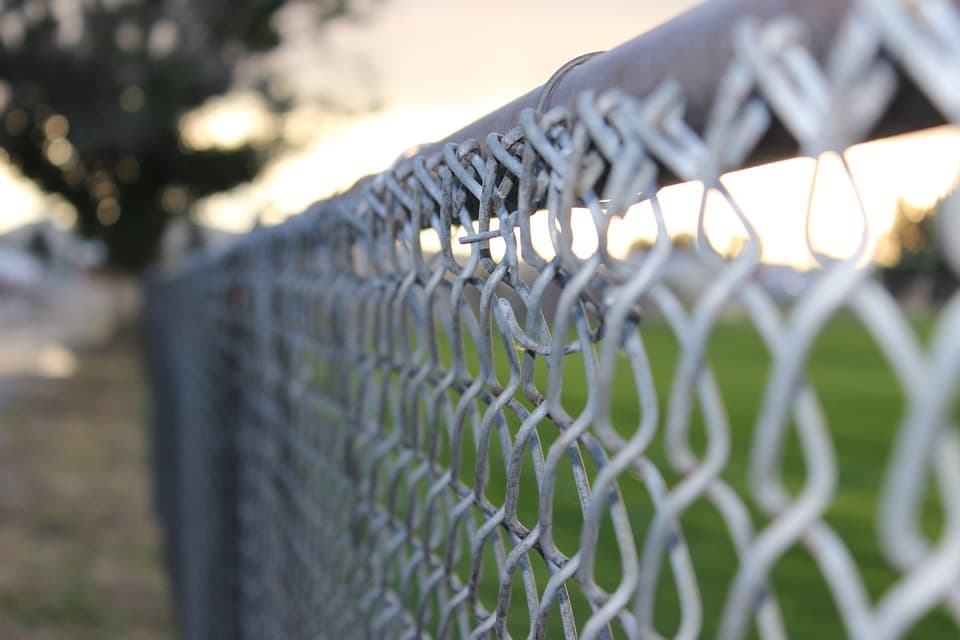
The chain link fence installation cost for your property depends on much more than the number of feet you need fenced. Height, wire gauge, gates, ground conditions, finish, access, removal work, and even the shape of the fence line can change the final estimate.
That is why two homeowners with similar-sized yards can receive very different quotes. Understanding the factors behind the price helps you compare estimates properly and spend money where it actually improves the fence.
Project-Guided by Empire Fence
Trusted fencing guidance that turns confusing material choices, property-line concerns, gates, site conditions, and installation requirements into clear next steps.
The goal is to help homeowners understand project risks early, avoid unnecessary upgrades, and make informed decisions before installing, replacing, or repairing a fence.
Quick Answer: What Affects Chain Link Fence Installation Cost?
Chain link fence installation cost is mainly affected by total linear footage, fence height, wire gauge, mesh size, coating, number and size of gates, terrain, site access, existing-fence removal, permits, and labor.
A straight fence on accessible, level ground with a standard residential specification usually requires less work than a taller coated fence with several gates, difficult soil, slopes, tight access, or demolition.
Chain Link Fence Cost Factors at a Glance
Cost Factor / Why It Changes the Price
- Linear footage: More fence requires more fabric, posts, rails, fittings, and labor.
- Fence height: Taller fencing requires more material and may need stronger components.
- Wire gauge: Heavier wire generally uses more steel and provides greater strength.
- Mesh size: Smaller openings can require more material.
- Finish: Galvanized and coated systems have different material costs.
- Gates: Gates add frames, hardware, posts, alignment, and installation work.
- Layout: Corners, changes in direction, and unusual shapes can increase complexity.
- Terrain: Slopes, rock, roots, and uneven ground can slow installation.
- Site access: Limited access can make moving materials and equipment harder.
- Existing fence: Removal and disposal add labor.
- Permits: Requirements vary by location and project.
- Add-ons: Privacy slats and other upgrades add material and labor.
The important point is simple: the lowest per-foot number does not always mean the lowest completed-project cost.
You need to understand what is included.
Why Chain Link Fence Cost Per Foot Does Not Tell the Whole Story
Cost per linear foot is useful for early planning, but it cannot describe the entire project.
Imagine two properties that each need the same amount of fencing. One has a straight, level fence line with a single pedestrian gate. The other has a slope, several corners, a driveway gate, an old fence to remove, and poor equipment access.
The footage may be identical.
The amount of work is not.
A better estimate considers the complete fence system: fabric, posts, rails, fittings, gates, footings, layout, ground conditions, access, and preparation.
That is why homeowners should be cautious about choosing a contractor based only on an advertised cost-per-foot figure.
1. Total Linear Footage Changes the Overall Project Size
The longer the fence line, the more material the project needs.
That means additional chain link fabric, line posts, top rail, fittings, ties, tension components, concrete, and labor.
A longer run does not always increase every part of the project at exactly the same rate. Some fixed project costs remain relatively similar whether the fence is short or long.
This is one reason very small projects can sometimes have a higher effective cost per foot than homeowners expect.
Before requesting estimates, get a rough measurement of the intended fence line.
It does not need to replace a professional site measurement. It simply gives the estimator a better starting point.
2. Fence Height Changes Material and Installation Requirements
A taller fence contains more material than a shorter fence.
It may also require stronger posts, additional handling, different hardware, and more installation time.
Think about why you need the fence before automatically choosing more height.
A fence intended mainly to define a property edge may have different requirements than one intended for pet containment, security, a commercial perimeter, or controlled access.
Paying for height you do not need increases the project cost without necessarily improving the way you use the property.
On the other hand, installing a fence that is too short and replacing it later is an even more expensive mistake.
Choose height based on function first.
3. Wire Gauge and Mesh Size Affect Strength and Price
Chain link may look simple from a distance, but not all chain link fabric is the same.
Wire thickness and mesh opening both affect the amount of metal in the fence, its strength, and its suitability for different uses.
What Chain Link Fence Gauge Means
Gauge describes wire thickness.
One detail frequently confuses homeowners: with chain link wire, a lower gauge number generally means a thicker wire.
Thicker wire can make sense where the fence will experience more demanding use. A lighter specification may be enough for a straightforward residential boundary.
The goal is not automatically to buy the heaviest fence available.
It is to use an appropriate specification for the property.
Why Diamond and Mesh Size Matter
The diamond-shaped openings in chain link fabric can also vary.
Smaller openings generally require more wire and can create a tighter, stronger barrier. That can be useful for certain security or specialty applications.
For a normal residential project, however, paying for a specification designed for a much more demanding application may be unnecessary.
Ask what gauge and mesh size are included in each quote.
Otherwise, two estimates that look similar on paper may actually be pricing different materials.
4. Galvanized vs. Vinyl-Coated Chain Link Changes Material Cost
Standard galvanized chain link remains popular because it is practical, durable, and relatively straightforward.
Vinyl-coated chain link changes the appearance and adds another layer of protection around the wire.
Black-coated chain link is particularly popular where homeowners want the fence to blend into landscaping instead of creating a bright metallic boundary.
The coating normally increases material cost.
That does not automatically make it the better choice.
Consider appearance, exposure, how visible the fence will be from the home or street, and how long you expect the installation to remain in place.
A backyard utility boundary may have very different priorities from a highly visible front or side fence.
5. Gates Can Change the Quote More Than Homeowners Expect
A fence run is repetitive.
A gate is not.
Every gate creates an opening that must function correctly while remaining aligned with the fence around it. It adds framing, hinges or operating hardware, gate posts, fittings, and installation time.
That is why gate planning deserves attention early.
Walk-Through Gates
A pedestrian gate may look like a small part of the project, but placement matters.
Think about how people actually move through the yard.
A poorly positioned gate may save a little during installation and remain inconvenient for years.
Driveway and Larger Access Gates
Vehicle access introduces more variables.
The opening is wider. Posts and hardware have more work to do, and clearance becomes more important.
Before deciding where a driveway gate should go, consider vehicle movement, swing space, slope, parking, trash access, deliveries, and any equipment that may need to pass through later.
Gate decisions should be made during layout planning, not after the fence line has already been installed.
6. Posts, Corners, and Layout Complexity Affect the Estimate
One hundred feet of straight fencing is different from one hundred feet containing multiple corners and direction changes.
Corners and ends require the fence to terminate or change direction correctly. Gate openings create additional structural points.
An unusual layout can therefore require more posts, fittings, measuring, alignment, and installation time than a simple straight run.
This is another reason total footage alone cannot determine the final chain link fence cost.
Before approving a quote, ask the chain link fence contractor whether corners, terminal posts, gate posts, transitions, and unusual layout conditions are already included in the scope.
A clear answer helps prevent surprises after work begins.
7. Terrain, Slope, and Soil Conditions Affect Installation Time
The ground underneath the fence matters almost as much as the fence itself.
Flat, accessible soil usually allows installation to move more predictably. Rocky soil, heavy roots, uneven grade, or significant slopes can require additional digging and adjustment.
Slope also affects the finished fence line.
Posts still need to be set correctly while the fencing follows the property in a practical and visually consistent way.
Do not assume your property is an “easy install” simply because the fence line looks clear from a distance.
Conditions below the surface can affect the work.
Photos help during early discussions, but an on-site review provides much better information when the ground is complicated.
8. Site Access and Preparation Can Add Hidden Cost
Where the fence is located can affect installation efficiency.
A wide-open side yard gives a crew more room to move materials and equipment. A narrow passage between buildings may not.
Existing landscaping, retaining walls, stored materials, sheds, trees, irrigation, or other obstacles can complicate access.
Before installation, look along the entire proposed fence line.
- Can materials reach the work area easily?
- Are shrubs or branches blocking access?
- Are there structures close to the line?
- Does the crew have room to dig and set posts?
- Are gates or passages wide enough for equipment?
Solving simple access problems before the installation date can prevent unnecessary delays.
9. Removing an Existing Fence Adds Labor and Disposal
Replacement projects have one major cost that new construction does not: something may need to come out first.
Removing old fabric is only part of the job.
Existing posts may need to be removed or cut out. Concrete footings, damaged gates, debris, and other materials can add work.
Disposal also needs to be considered.
Do not assume removal is included in a new-fence quote.
Ask specifically whether the estimate covers demolition, hauling, disposal, and cleanup.
You should know whether the quoted price begins with an empty fence line or includes the work required to make it empty.
10. Permits, Property Lines, and Utility Marking Matter Before Installation
A fence is a permanent improvement placed close to the edge of a property.
That means layout accuracy matters.
Local rules may affect allowable fence location, height, setbacks, visibility near driveways, and other requirements. Homeowners should also be confident about property boundaries before work starts.
Underground utilities are another reason fence layout cannot be treated casually.
Posts require digging.
For homeowners planning fence installation in Ontario, CA, confirming the project scope, local requirements, boundary conditions, and proposed gate locations before installation helps keep the estimate tied to the actual property rather than a generic per-foot assumption.
These checks can feel like small planning details.
They are much cheaper to address before posts are installed.
11. Labor Cost Depends on More Than Fence Length
Homeowners sometimes assume labor should simply equal a fixed amount multiplied by the number of feet.
Real installations are not that uniform.
Labor can change according to:
- post-hole conditions;
- fence height;
- number of gates;
- corners and transitions;
- removal work;
- equipment access;
- slopes;
- material handling;
- layout complexity.
Proper chain link installation also requires the fence fabric to be stretched and secured correctly.
A fence that looks acceptable immediately after installation can still develop problems if posts, tension, gate alignment, or other details were handled poorly.
Comparing labor only by price can therefore be misleading.
Compare the work included.
12. Privacy Slats and Other Upgrades Increase the Final Cost
Chain link can be customized.
Privacy slats can reduce visibility through the fence. Coated materials can change its appearance. Gates, special access points, and other components can further tailor the system.
Each upgrade should solve a real problem.
If privacy is your highest priority, ask whether adding extensive privacy features to chain link still makes more sense than choosing a different fence material.
If security and economical perimeter coverage matter more, a simpler chain link configuration may deliver better value.
The smartest project is not the one with the most options.
It is the one where every option has a purpose.
Which Chain Link Fence Costs Can You Control?
Some project costs come from the property.
Others come from choices you make.
More Controllable / Less Controllable
- Fence height: Rocky soil
- Gauge choice: Existing slope
- Finish: Property shape
- Number of optional gates: Restricted site access
- Privacy upgrades: Required demolition
- Decorative additions: Local requirements
This distinction is useful when working with a budget.
Do not compromise important structural requirements simply to reduce the quote.
Instead, look first at optional specifications.
For example, changing an unnecessary finish or accessory can make more sense than reducing the strength of a fence that will receive heavy daily use.
Costs Homeowners Often Forget to Include
The fence material itself gets most of the attention.
Homeowners sometimes forget about:
- existing-fence removal;
- disposal;
- clearing vegetation;
- difficult digging;
- gates and gate hardware;
- unusual access;
- property-line questions;
- local permit requirements;
- grading or site preparation;
- privacy additions;
- changes made after installation begins.
The best time to discover these issues is during estimating.
The worst time is halfway through the job.
Walk the fence line before requesting the final quote and point out anything that might affect access, digging, demolition, or layout.
How to Compare Chain Link Fence Installation Quotes
Do not compare only the number at the bottom.
Start by checking whether each contractor is quoting the same fence.
A quote using different height, gauge, coating, gate specifications, post spacing, or demolition assumptions is not an apples-to-apples comparison.
What a Clear Fence Quote Should Show
Look for clarity around:
- total fence footage;
- fence height;
- wire or fabric specification;
- coating or finish;
- gates;
- posts and hardware;
- old-fence removal;
- site preparation;
- labor;
- cleanup;
- exclusions.
Also ask what happens if unexpected site conditions are discovered.
A very low quote can become expensive if major parts of the project were simply left outside the original scope.
A well-defined estimate helps you understand what you are actually buying.
DIY vs. Professional Chain Link Fence Installation
Installing chain link yourself can reduce direct labor expense.
That does not make every project a good DIY candidate.
A successful installation involves more than rolling out mesh. Posts need proper placement and alignment, gates must operate correctly, and the fabric needs the right tension.
DIY becomes more difficult when the project includes slopes, large gates, hard soil, demolition, long fence runs, or complex boundaries.
There is also a practical question:
Do you already own or have access to the tools required to do the work correctly?
Tool rental, material delivery, disposal, additional trips, and correcting mistakes can reduce the apparent savings.
For a short and straightforward run, an experienced homeowner may be comfortable doing the work.
For structural complications, gates, boundary uncertainty, or demanding terrain, professional installation can prevent expensive corrections later.
When Chain Link Is the Cost-Conscious Fence Choice
Chain link makes the most financial sense when the main goals are enclosure, security, visibility, controlled access, and practical coverage.
It can be particularly useful for long property lines, side yards, pet areas, utility spaces, and properties where function matters more than complete visual privacy.
That does not mean chain link is right everywhere.
A homeowner who wants strong privacy or a highly decorative street-facing fence may be better served by another material.
But when the job calls for straightforward perimeter control, professionally planned chain link fence installation can keep the project focused on the features the property actually needs rather than paying for features it does not.
Frequently Asked Questions About Chain Link Fence Cost
How much does chain link fence installation cost?
There is no reliable single price that applies to every property.
The final cost depends on footage, height, wire specification, coating, gates, layout, terrain, access, demolition, local requirements, and labor. A site-specific estimate is therefore more useful than relying only on a national per-foot figure.
What makes a chain link fence more expensive?
The biggest cost increases usually come from more footage, greater height, heavier material specifications, additional or larger gates, coated materials, difficult terrain, poor access, demolition, and complex layouts.
Optional privacy or appearance upgrades can also increase the final price.
Does a taller chain link fence cost more?
Usually, yes.
A taller fence requires more fabric and can affect post, hardware, handling, and installation requirements. Choose height according to the job the fence needs to perform rather than automatically choosing the tallest option.
Does black or vinyl-coated chain link cost more?
Coated chain link generally costs more than a basic galvanized system because the material includes an additional finish.
Many homeowners choose it because they prefer its appearance and want the fence to blend more naturally into the property.
Are gates normally included in a fence estimate?
Never assume they are.
A clear estimate should identify the number, width, type, and location of gates included in the project. Driveway and larger-access gates can affect the project considerably more than a simple pedestrian gate.
Can installing the fence yourself reduce the cost?
DIY installation can reduce direct labor expense, particularly on a small and uncomplicated fence.
Savings become less predictable when you need equipment rental, difficult excavation, multiple gates, demolition, material delivery, or professional correction of installation mistakes.
Do permits affect the cost of installing a chain link fence?
They can.
Requirements vary by location and project. Fence height, placement, property conditions, and local regulations may affect what needs to happen before installation begins.
Confirm requirements before finalizing the project rather than treating permits as an afterthought.
Get a Clear Chain Link Fence Estimate Before You Build
A chain link fence quote should explain the project, not leave you guessing.
Before comparing prices, confirm the footage, height, gauge, finish, gate layout, terrain, access, removal work, and other conditions behind each estimate.
That makes it much easier to distinguish a genuinely efficient fence project from a quote that simply leaves important work out.
A little planning before installation can prevent expensive changes after the posts start going into the ground.