Choosing between a chain link fence and a wood fence usually comes down to what you need the fence to do. Chain link is typically the practical choice for lower cost, easier maintenance, visibility, and covering a large area, while wood is usually stronger for privacy, appearance, and creating a more finished backyard.
Neither material is automatically better for every property. Your budget, yard layout, privacy needs, pets, gates, maintenance expectations, and the way you use the property should all influence the decision.
Project-Guided by Empire Fence
Trusted fencing guidance should turn confusing material choices, property-line concerns, access needs, and installation requirements into clear next steps.
Empire Fence approaches fencing by looking at the complete property first. Fence lines, gates, grade changes, transitions, security needs, privacy goals, and daily access can matter just as much as the material itself.
The goal is not to push every property owner toward the same fence. It is to help homeowners, property managers, and business owners understand the trade-offs before spending money on a new installation.
Quick Answer: Is Chain Link or Wood Fence Better?
Choose chain link if your priorities are lower cost, low maintenance, visibility, pet containment, or efficiently fencing a large perimeter. Choose wood if privacy, curb appeal, customization, and creating a more enclosed outdoor space matter more.
For many residential backyards, wood is the more attractive privacy solution. For long property lines, dog runs, utility areas, commercial boundaries, and cost-conscious projects, chain link often makes more practical sense.
There is also no rule saying the entire property must use one material. On some sites, combining wood and chain link can solve different problems in different areas.
Chain Link Fence vs Wood Fence at a Glance
| Factor | Chain Link Fence | Wood Fence | | --- | --- | --- | | Upfront cost | Usually lower | Usually higher | | Privacy | Low without additions | Excellent with solid boards | | Maintenance | Low | Moderate to high | | Appearance | Practical and open | Warm and residential | | Visibility | Excellent | Limited with solid panels | | Customization | Moderate | High | | Pet containment | Excellent | Excellent | | Large properties | Very practical | Can become expensive | | Sloped areas | Adapts well to grade | Requires more planning | | Wind exposure | Open mesh allows airflow | Solid panels catch more wind | | Privacy options | Slats or screening can help | Built into solid fence styles | | Best fit | Security, containment, large runs | Privacy, aesthetics, outdoor living |
That comparison is a useful starting point, but a fence should not be selected from a chart alone. The way the property is laid out can change which option gives you better value.
What Is the Main Difference Between a Chain Link Fence and a Wood Fence?
The biggest difference is that chain link creates a visible boundary, while a solid wood fence can create a visual barrier.
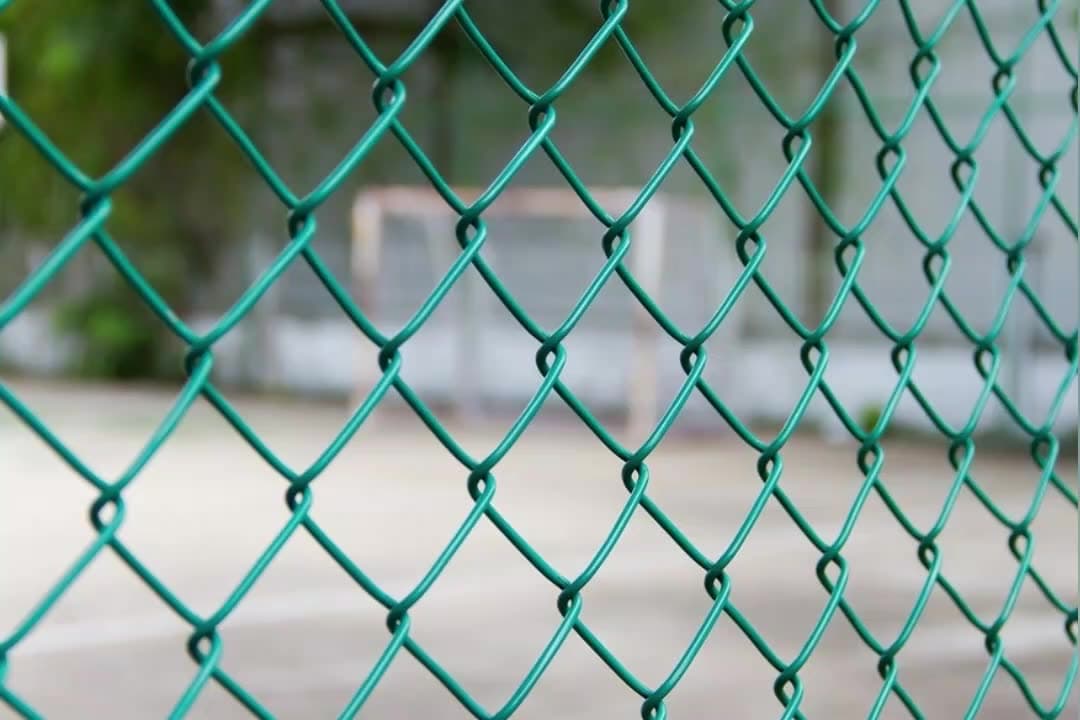
Chain link lets you see through the fence. That makes it useful when you want containment or perimeter control without closing off the property.
Wood can block the view almost completely when built as a privacy fence. That makes it a common choice around patios, pools, side yards, and backyards where homeowners want separation from neighbors or the street.
The materials also create very different ownership experiences. Chain link is normally closer to install-and-maintain-as-needed, while wood needs more attention over its life to keep it looking and performing well.
Which Costs Less: Chain Link Fence or Wood Fence?
In most comparable projects, chain link fencing costs less upfront than a wood privacy fence.
The material itself is generally economical, and a chain link system can cover long distances efficiently. Wood uses posts, rails, and individual boards or panels, and decorative designs can add more material and labor.
That does not mean every chain link quote will be cheaper than every wood quote. Fence height, coating, wire specifications, gates, demolition, access, terrain, and project size can all change the final number.
Upfront Installation Cost
If the main goal is creating a secure boundary over a large area while controlling the budget, chain link often has the advantage.
That difference becomes more important as the fence run gets longer. A small price difference per foot can become a meaningful project difference when you are enclosing a large yard, storage area, commercial property, or long boundary.
Wood may justify its higher cost when privacy or appearance is one of the main reasons for installing the fence.
Instead of asking only, “Which fence is cheaper?” ask:
Which fence gives me the function I actually need without paying for features that do not matter to me?
Long-Term Maintenance Cost
Initial installation is only part of the cost.
Chain link generally needs less routine care. You should still inspect posts, gates, fittings, coatings, and areas where damage or corrosion may begin, but it does not need staining or sealing.
Wood requires more ongoing attention.
Sun, moisture, insects, ground conditions, and age can affect boards and posts. Depending on the material and finish, cleaning, staining, sealing, board replacement, or other repairs may become part of ownership.
A lower purchase price is useful, but long-term value should include the amount of maintenance you are willing to perform.
What Changes the Final Fence Price?
Several details can move the price in either direction:
- Total linear footage
- Fence height
- Number and size of gates
- Wood species and grade
- Chain link gauge and coating
- Privacy slats
- Existing fence removal
- Soil and digging conditions
- Slope or grade changes
- Access for crews and materials
- Corners and transitions
- Special security requirements
This is why a site-specific estimate is more useful than applying one national cost-per-foot figure to every property.
Which Fence Provides More Privacy?
A solid wood fence wins this comparison clearly.
Wood privacy fencing can block sightlines from neighboring properties, streets, sidewalks, and other areas around the yard. It can make a patio, pool area, or backyard feel much more enclosed.
Chain link is designed differently. Its open mesh creates a physical boundary while maintaining visibility.
Wood Fence Privacy
For homeowners who say, “I do not want people seeing into my backyard,” wood is usually the stronger starting point.
Solid boards can create continuous screening. Fence height and board configuration can then be selected around the amount of privacy you need and what local requirements allow.
Wood also gives you more freedom to create a visual style that feels like part of the house rather than simply a property boundary.
Can You Make a Chain Link Fence More Private?
Yes, but with limitations.
Privacy slats can be inserted into chain link mesh. Screening products and landscaping can also reduce sightlines.
These additions can improve privacy, but they do not automatically turn chain link into the equivalent of a solid wood privacy fence.
Slats also change the appearance, airflow, wind load, and cost of the system. If full visual privacy is your first priority, compare the complete finished chain link system with a wood privacy fence rather than comparing basic chain link against finished wood.
Which Fence Requires Less Maintenance?
Chain link is usually the lower-maintenance choice.
A properly installed galvanized or coated chain link fence does not need regular painting, staining, or sealing. Routine ownership is normally focused on keeping the fence clean, watching for damage, checking gates, and addressing corrosion if it develops.
Chain Link Fence Maintenance
Pay attention to:
- Loose fittings
- Damaged mesh
- Leaning posts
- Gate alignment
- Corrosion around damaged coating
- Vegetation pushing against the fence
Small problems are usually easier to manage before they spread across a larger section.
For a property where reducing routine maintenance is a major priority, professional chain link fence installation is worth considering early in the planning process.
Wood Fence Maintenance
Wood asks more from the owner.
Boards can fade, dry, crack, warp, loosen, or develop decay depending on the wood, exposure, finish, and installation. Staining or sealing can help protect the surface and preserve the appearance.
Inspect wood fencing periodically for:
- Loose boards
- Cracks
- Rot near the bottom
- Leaning posts
- Fasteners pulling loose
- Termite or insect damage
- Gate sag
- Surface deterioration
If you want a natural fence and do not mind maintaining it, those requirements may be a fair trade for the privacy and appearance wood provides.
If you want to install the fence and think about it as little as possible afterward, chain link has the advantage.
Which Lasts Longer: Chain Link or Wood?
There is no single lifespan number that applies to every fence.
A fence's life depends on material quality, coatings, wood species, post installation, drainage, soil movement, impact damage, maintenance, weather exposure, and how heavily gates or other components are used.
Chain link often has an advantage because steel does not rot, warp, or attract wood-damaging insects. Wood can also provide many years of service when it is built correctly and maintained.
What Affects Chain Link Fence Lifespan?
The condition of the metal matters.
Galvanized coatings help protect steel against corrosion. Vinyl-coated systems add another layer over the wire and can also create a cleaner residential appearance.
Posts are just as important as mesh.
A fence with good fabric but poorly set posts can still lean, move, or lose tension. Gates can also become the first weak point if their size, hinges, posts, and daily use were not considered during installation.
What Affects Wood Fence Lifespan?
The species and quality of the lumber matter, but construction matters too.
Posts take significant stress. Boards need proper fastening, and gates need enough support to remain aligned as the fence ages.
Water exposure and soil contact can accelerate deterioration. Strong sunlight can dry and fade exposed surfaces.
Maintenance can slow some of that deterioration, but it cannot compensate for poor initial construction.
This is one reason material should never be the only question you ask a fence contractor. How the line, posts, gates, grade, and transitions will be handled is equally important.
Which Fence Looks Better and Adds More Curb Appeal?
For most traditional residential settings, wood has the advantage in appearance.
Wood has texture, warmth, and natural variation. It can complement landscaping, patios, exterior colors, and different home styles.
It also offers more design freedom.
You can change:
- Board layout
- Fence height
- Stain
- Paint
- Top profile
- Trim
- Spacing
- Decorative details
Chain link has a more functional look.
Standard galvanized fencing is usually chosen because it works rather than because it becomes the main visual feature of the yard.
Black or other vinyl-coated chain link can soften that industrial appearance. Against landscaping, darker coatings can visually recede and make the fence less noticeable.
That can be an advantage when you want a boundary without creating a solid visual wall.
Which Is Better for Security, Children, and Pets?
Both materials can support security and containment, but they do it differently.
Security is not simply a question of which fence is harder to cross. Visibility, height, gate quality, access control, privacy, and what the fence is protecting all matter.
Chain Link for Visibility and Containment
Chain link is highly practical for dog runs, backyards, long lot lines, and other areas where the main goal is keeping people or animals on the correct side of the boundary.
Because you can see through it, you can also monitor what is happening on both sides of the fence.
That visibility can be useful around:
- Commercial areas
- Utility spaces
- Large yards
- Play areas
- Dog enclosures
- Storage areas
- Property boundaries
For dogs, fence height, mesh condition, the bottom edge, gate latches, and the dog's behavior all matter. A determined dog can challenge almost any poorly planned fence.
Wood for Privacy and Visual Screening
Wood offers another kind of security because it prevents people from easily seeing into the property.
That can help conceal outdoor equipment, patios, pools, vehicles, storage, and everyday activity.
Solid wood can also reduce visual stimulation for some dogs that react strongly to people, animals, or traffic outside the yard.
The trade-off is reduced visibility. You cannot see through a solid fence to monitor what is happening immediately outside it.
The better security option therefore depends on whether you value visibility or screening more.
How Your Property Can Change the Decision
This is where online comparison charts often become less useful.
Two homeowners can want exactly the same fence material but have completely different projects because their lots, grades, gates, and access requirements are different.
Slopes and Grade Changes
Chain link adapts naturally to many gradual changes in grade because the mesh can follow the fence line.
Wood privacy fencing on slopes requires more design thought. Depending on the style and grade, the fence may need to step or follow the contour in another way.
The important issue is what happens at the bottom of the fence.
Large gaps can become a problem for pets, privacy, appearance, or security.
Long Fence Runs and Large Properties
Chain link becomes especially attractive when you need to enclose a large area economically.
A long rear property line, large backyard, utility area, dog run, or commercial perimeter may not need the visual character of a wood privacy fence.
In those situations, paying for solid wood across the entire run may provide little extra practical value.
On the other hand, a smaller backyard used for entertaining may benefit far more from the privacy and finished appearance of wood.
Gates and Daily Access
Do not treat gates as an afterthought.
Think about:
- How wide the opening must be
- Whether people or vehicles will use it
- Which way it should swing
- What clearance is available
- Whether the ground slopes through the opening
- How often it will operate
- Whether extra security is required
A beautifully built fence with a poorly planned gate becomes frustrating every day.
Property Lines, HOA Rules, and Local Requirements
Before installation, confirm where the fence should go and whether any rules affect material, height, placement, or appearance.
HOA standards can be more restrictive than general municipal rules.
Property-line assumptions can also become expensive if the fence is installed in the wrong place.
Do not rely on what a neighbor installed years ago as proof that the same design will be allowed on your property. Verify the requirements that apply to your specific project.
When Is a Chain Link Fence the Better Choice?
Chain link is usually the better starting point when you want:
- Lower upfront cost
- Low maintenance
- A long fence run
- Pet containment
- A dog run
- Clear sightlines
- A practical property boundary
- A fence for a utility area
- Commercial perimeter coverage
- Efficient fencing around a large lot
- A material that works well across changing grades
It is especially useful when the fence's main job is containment or boundary control, not visual privacy.
For many commercial properties, storage areas, side yards, and large residential lots, that is exactly the job the fence needs to perform.
When Is a Wood Fence the Better Choice?
Wood is usually the better starting point when you want:
- Backyard privacy
- Separation from neighbors
- A more traditional residential appearance
- Greater customization
- A solid visual barrier
- A fence that becomes part of the landscape design
- Privacy around patios or outdoor living areas
- More screening from roads or surrounding properties
Wood makes the most sense when you actually value what you are paying extra to receive.
If your only goal is keeping a dog inside a half-acre property, solid privacy fencing around the entire site may be unnecessary.
If your goal is turning a close-set backyard into a private outdoor room, however, basic chain link may leave the most important problem unsolved.
Can You Use Wood and Chain Link on the Same Property?
Yes, and on the right property it can be the smartest solution.
Suppose you want privacy around the patio and side yard but have a long rear property line that mainly needs containment.
You could use wood where people spend time and where sightlines matter, then use chain link where visibility is acceptable.
Another property might need an attractive wood fence near the front-facing portion of the home and chain link around a utility area or dog run.
A mixed-material plan can help control the budget while still giving you privacy where it matters.
The important thing is to design the fence as one complete system. Transitions, corners, gates, heights, and sightlines should look intentional rather than improvised.
Why Installation Quality Matters as Much as Fence Material
A good fence material can still perform poorly when the installation is wrong.
Post placement, fence alignment, grade, tension, fasteners, gates, drainage conditions, and transitions all influence how the finished fence behaves.
That is especially important in areas where:
- The yard slopes
- Large gates are required
- Existing walls meet the fence
- Access is tight
- The old fence must be removed
- Pets need gaps controlled
- Different fence materials meet
- The property has long boundary runs
Empire Fence plans fencing around those site conditions rather than treating every yard as a straight, level rectangle.
Property owners considering fence installation in Ontario, Jurupa Valley, or nearby Inland Empire communities should think through material and layout together before finalizing the scope.
A few minutes spent solving the layout before construction can prevent years of frustration afterward.
Frequently Asked Questions
Is chain link cheaper than wood?
In most comparable projects, yes. Basic chain link is generally less expensive than solid wood privacy fencing and usually requires less routine maintenance.
The exact difference depends on height, materials, coating, gates, total footage, terrain, demolition, and installation conditions.
Which fence requires less maintenance?
Chain link normally requires less maintenance.
Wood needs more ongoing care because weather exposure can affect boards, posts, finishes, and fasteners. Staining or sealing may also be part of maintaining the appearance and surface condition.
Which fence gives you more privacy?
A solid wood privacy fence provides far more visual privacy than standard chain link.
Privacy slats and screening can improve chain link, but they should be considered part of the total fence design rather than assumed to perform exactly like solid wood.
Is chain link good for dogs?
Yes. Chain link is widely used for pet containment because it creates a durable, visible boundary and can economically enclose larger areas.
The correct fence height, bottom clearance, gate hardware, and the individual dog's behavior still need to be considered.
Can chain link fencing look attractive?
Yes.
Vinyl-coated chain link, particularly darker finishes, can look cleaner and blend more naturally into landscaping than standard galvanized mesh.
It will still have a more practical appearance than most wood fencing.
Which fence works better on a slope?
Chain link often adapts efficiently to changing grade.
Wood fencing can also work on slopes, but the design needs to address stepping, bottom gaps, alignment, and the finished appearance more carefully.
Does a wood fence last longer than chain link?
Not automatically.
Actual lifespan depends on material quality, exposure, installation, maintenance, soil conditions, coatings, lumber species, and damage. Chain link avoids rot and insect damage, while a well-built and maintained wood fence can also provide long service.
Should I get an estimate before choosing the material?
Yes, especially if the property has slopes, multiple gates, existing fencing, difficult access, long runs, or uncertain boundaries.
An estimate can compare the materials against the actual property instead of forcing you to choose based only on online averages.
Get Help Choosing the Right Fence for Your Property
The best fence is not simply the cheapest option or the material that looks best in a photo.
It is the fence that gives you the privacy, security, access, appearance, and maintenance level your property actually needs.
If you are deciding between chain link and wood, start by identifying what problem the fence must solve. Then look at the property itself—length, grade, gates, sightlines, access, and the areas where privacy matters most.
Empire Fence can help you compare those factors and build a scope around the way the property will actually be used.
Request a free estimate and get a practical recommendation for your fence before committing to the material.