
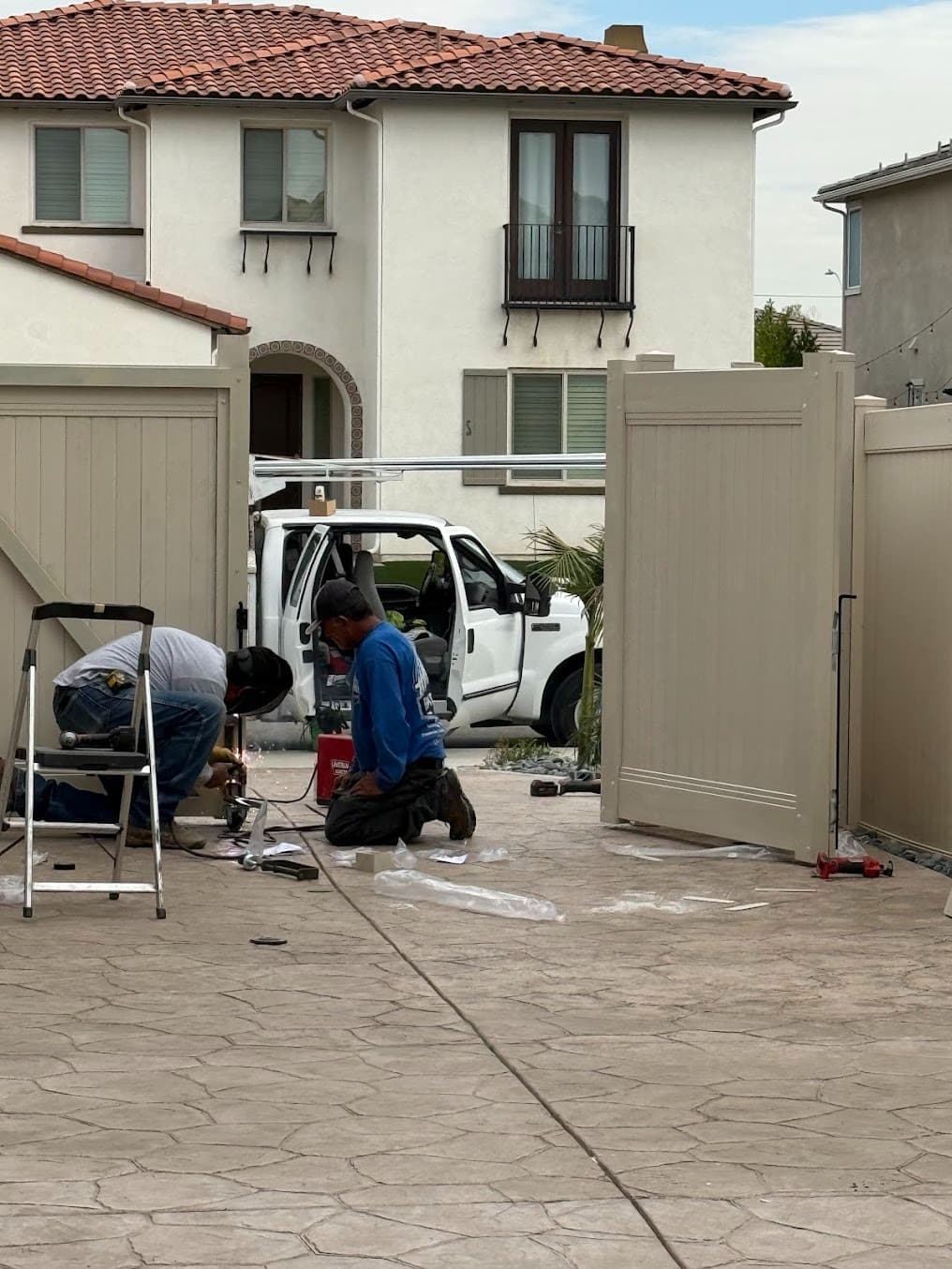
A fence is not just a line around your property. It affects privacy, security, curb appeal, pets, children, gates, parking access, and the way your outdoor space works every day.
That is why how to choose a fence company matters before you sign a quote. The right team will explain materials, permits, timelines, property lines, gates, warranties, and installation details clearly before work begins. The wrong one will cost you time, money, and a result that underperforms from day one.
Quick Answer: What Should You Look for in a Fence Company?
Look for a fence company that is licensed, insured, experienced with your type of project, clear about permits, and willing to provide a written estimate. The estimate should explain materials, labor, gates, removal, cleanup, payment terms, warranty coverage, and anything that is excluded.
A strong fence contractor should also answer questions about property lines, utility marking, post installation, gate hardware, slope, drainage, and local code requirements. If the company avoids details, pressures you to decide quickly, or asks for full payment upfront, keep looking.
At a Glance: Fence Company Hiring Checklist
- License and insurance
- Local fence experience
- Written estimate
- Clear material details
- Permit responsibility
- Utility line marking
- Property line awareness
- Gate and hardware details
- Workmanship warranty
- Manufacturer warranty
- Online reviews
- Recent project photos
- References when needed
- Clear timeline
- Reasonable payment schedule
1. Start With License, Insurance, and Local Experience
A fence contractor should be able to explain whether they are licensed for the work they perform and whether they carry insurance. This matters because fence work involves digging, concrete, heavy materials, gates, boundaries, and possible damage to underground lines.
Insurance is especially important. If something is damaged during the job or a worker is injured, you do not want confusion about responsibility.
Why License and Insurance Matter
A licensed and insured contractor shows that the business is operating with basic professional standards. It does not guarantee perfect work, but it gives you a stronger starting point than hiring someone who cannot provide documentation.
Ask for proof before work begins. A serious company will not be offended by this question.
Why Local Experience Matters
Local experience matters because fence rules can vary by city, neighborhood, HOA, and property type. Height limits, front-yard restrictions, pool fencing rules, setbacks, and permit requirements may all affect the project.
2. Compare Written Estimates, Not Just Prices
A low price can look attractive at first. But if the quote leaves out removal, gates, permits, hardware, concrete, cleanup, or difficult grading, the final cost may not be low at all.
Always compare written estimates line by line. You are not only comparing price — you are comparing scope.
What a Fence Estimate Should Include
- Fence material
- Fence height
- Total linear footage
- Number of gates
- Gate hardware
- Post type
- Post-setting method
- Removal of old fencing
- Permit fees, if applicable
- Utility marking responsibility
- Cleanup
- Timeline
- Warranty
- Payment schedule
- Exclusions
Why the Cheapest Quote Can Cost More Later
The cheapest quote may use thinner materials, shallow post holes, weak hardware, or unclear labor terms. That does not mean you should automatically choose the highest quote, but you should choose the quote that is clear, complete, and realistic.
3. Ask About Materials, Posts, Gates, and Installation Methods
Materials are only one part of a good fence. Installation quality matters just as much.
A beautiful fence can fail early if the posts are weak, the gate is poorly supported, or the hardware is not matched to the weight of the gate. This is why you should ask how the company installs fences, not just what material they sell.
Materials Should Match Your Property Goals
Different materials solve different problems. Wood can offer a natural look and privacy but may need more maintenance. Chain link can be practical and cost-effective for security or boundary control.
A vinyl fence may be a strong fit when you want a clean appearance and lower maintenance. The right choice depends on your privacy needs, budget, property layout, and long-term expectations.
Gates and Posts Deserve Extra Attention
Gates often fail before the rest of the fence because they move every day. A gate needs proper framing, strong hinges, good latch hardware, and enough support to prevent sagging.
4. Confirm Permits, Property Lines, and Utility Marking
Fence projects can create problems when permits, property lines, or underground utilities are ignored. These issues can delay the job or cause costly disputes.
Before work begins, ask who is responsible for confirming requirements. Do not leave this part unclear.
Who Handles Permits?
Some areas require permits for fence installation, especially when the fence is tall, near a street, near a pool, or part of a commercial property. A good contractor should tell you whether a permit may be needed and whether they handle it.
Who Checks Utility Lines and Boundaries?
Digging without checking utility lines is risky. Ask whether the contractor coordinates utility marking before digging. You should also be clear about property lines, easements, shared driveways, and neighbor boundaries before installation begins.
5. Review Photos, References, and Recent Customer Feedback
A fence company should be able to show examples of recent work. Photos help you see straight lines, clean corners, gate quality, material choices, and finishing details.
Online reviews can also reveal patterns. One bad review does not always mean a company is bad, but repeated complaints about delays, poor communication, surprise costs, or weak workmanship should make you pause.
6. Understand Warranties, Timelines, and Communication
A good fence company should explain what is covered after installation. There may be a workmanship warranty from the contractor and a separate manufacturer warranty for materials.
Communication also matters. If a company is hard to reach before you pay, it may not become easier after the job starts.
7. Watch for Fence Company Red Flags
- No written estimate
- No proof of insurance
- No license information
- Full payment required upfront
- Cash-only pressure
- Vague material descriptions
- No warranty details
- No clear timeline
- No permit discussion
- No utility marking plan
- Poor communication
- No recent project photos
- Pressure to sign immediately
Questions to Ask Before Hiring a Fence Company
- Are you licensed and insured?
- Have you completed similar projects nearby?
- What materials do you recommend for my property?
- What is included in the written estimate?
- What is not included?
- Who handles permits?
- Who marks utility lines?
- How do you handle slopes or uneven ground?
- How deep will the posts be set?
- What type of hardware will be used on gates?
- Is old fence removal included?
- Is cleanup included?
- What warranty do you provide?
- What is the payment schedule?
- Who will be on-site during the work?
FAQ About Choosing a Fence Company
How many fence estimates should I get?
Try to get at least two or three estimates when possible. This helps you compare pricing, materials, scope, warranties, and communication.
Should I choose the cheapest fence company?
Not always. A cheap quote may be fine if the scope is clear and the company is qualified, but the lowest price can also mean missing items or weaker materials.
What should be included in a fence estimate?
A fence estimate should include material type, height, footage, gates, posts, hardware, labor, removal, cleanup, permits, timeline, payment terms, warranty, and exclusions.
Do fence companies handle permits?
Some do, and some do not. Ask this directly before signing. For many homeowners, choosing a company that understands local permitting and inspection requirements can make the project smoother.
How do I know if a fence company is reputable?
A reputable fence company should have proof of insurance, clear estimates, recent project examples, consistent reviews, warranty information, and professional communication.
Choose Carefully Before You Build
A fence should make your property more useful, private, secure, and attractive. But the final result depends heavily on the company you hire.
Before approving your fence installation, compare more than price. Look at the estimate, materials, permits, posts, gates, warranty, reviews, and the way the contractor communicates.
If a company explains the details clearly, puts the scope in writing, and helps you understand your options, you are much more likely to get a fence that looks good and lasts. Choose carefully now, and the project will be easier from the first estimate to the final walkthrough.
If you are ready to move forward, contact Empire Fence and share the property details, photos, and the part of the project that still feels unclear. That is usually the fastest path to an honest, complete estimate.