
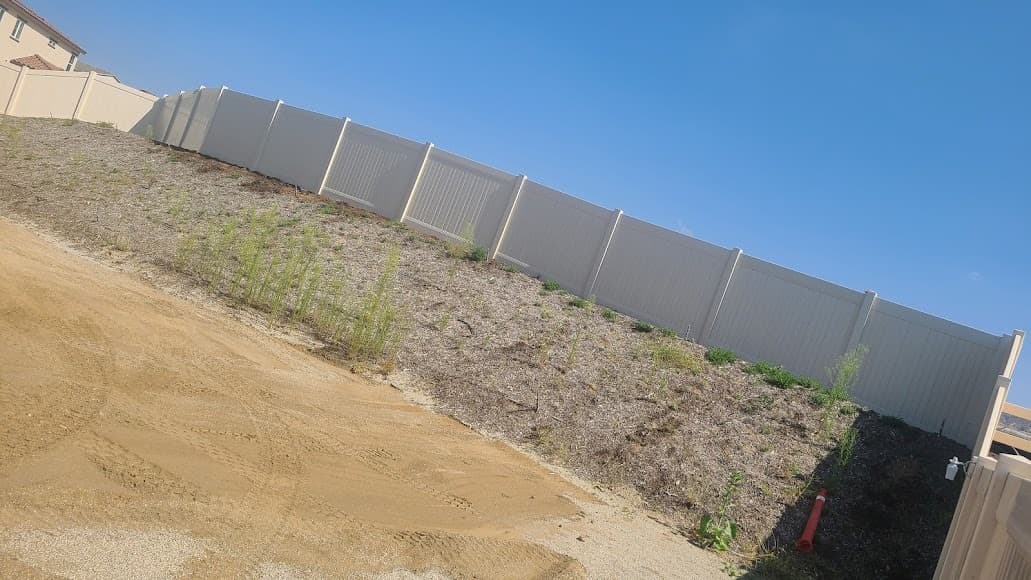
Measuring for a fence sounds simple until you start walking the yard and notice slopes, gates, corners, trees, old posts, and unclear property lines. A few wrong numbers can lead to extra material costs, delays, awkward panel cuts, or a fence line that does not sit where it should.
This guide explains how to measure for a fence the practical way. You will learn how to mark your layout, calculate linear feet, plan gate openings, check for common problem areas, and prepare better information before requesting a quote.
Quick Answer: How Do You Measure for a Fence?
To measure for a fence, first confirm where the fence line will go. Then mark each corner, end point, and gate opening with stakes or flags.
Measure each straight section separately, write down every length, and add those numbers together to get your total linear feet. Before digging or ordering materials, check property lines, slope, gate widths, local rules, and underground utilities.
At a Glance: What You Need Before Measuring
- Confirm the planned fence line before measuring
- Use a long tape measure or measuring wheel for accurate linear footage
- Mark corners, ends, gate openings, and turns with stakes or flags
- Measure each straight fence run separately
- Record gates, slopes, obstructions, and unclear boundary areas
- Check property lines, local codes, HOA rules, and underground utilities before installation
Why Accurate Fence Measurements Matter
Accurate fence measurements help you estimate material, labor, gate placement, post spacing, and overall project cost. They also help prevent one of the most common fence-planning problems: ordering too much material or not ordering enough.
A fence is measured in linear feet, not square feet. That means you are measuring the length of the fence line, not the total area of the yard.
Good measurements also make conversations with a fence company or installer much easier. When you know your approximate linear footage, gate locations, and trouble spots, your estimate can be more realistic from the start.
Tools You Need to Measure Your Yard for a Fence
You do not need complicated equipment for a basic fence measurement. You do need tools that help you stay accurate and organized.
Use these items before walking the fence line:
- Long tape measure or measuring wheel
- Stakes or marking flags
- String line or twine
- Notepad and pencil
- Calculator
- Property survey, if available
- Spray paint or landscape marking paint, if allowed
- Level, especially if the yard has slope
- Gloves and a small hammer or mallet
A measuring wheel is useful for long runs, but a tape measure is often more accurate for short sections, gate openings, and tight spaces. If possible, measure with another person so one person can hold the tape while the other records the number.
Step-by-Step: How to Measure for a Fence
Step 1: Confirm the Fence Line and Property Boundaries
Start by deciding exactly where the fence should go. Walk the planned fence line slowly and look for existing markers, survey pins, old fence posts, sidewalks, driveways, trees, slopes, and neighboring structures.
Do not guess property lines. If the fence will be near a shared boundary, review your property survey or speak with the proper local office before treating that line as final.
This step matters because moving a fence after installation can be expensive. It can also create neighbor disputes, code issues, or permit problems.
Step 2: Sketch Your Fence Layout
Draw a simple sketch of the yard before you measure. It does not need to be artistic or perfectly scaled.
Mark the house, driveway, patio, sidewalk, pool, garden beds, trees, utility areas, and any existing fence. Then draw the planned fence line around those features.
Label each straight section as a separate run. For example, you might label them Run A, Run B, Run C, and Run D.
This sketch will become your working map. It helps you avoid missed sections and makes your notes easier to understand later.
Step 3: Mark Corners, Ends, and Gate Openings
Place a stake or flag anywhere the fence changes direction. These points include corners, end posts, gate areas, driveway openings, and sections where the fence stops at a wall or existing structure.
Next, mark where each gate will go. A walking gate may need a different opening than a driveway gate, and the gate posts must be planned carefully.
Do not treat gate openings as an afterthought. Gates affect hardware, post placement, swing clearance, access, and final cost.
Step 4: Measure Each Straight Fence Run
Measure one straight section at a time. Pull the tape tight between two marked points and write down the measurement immediately.
Do not round too aggressively. If a section is 47 feet 8 inches, write that down instead of calling it 48 feet too early.
Repeat this process for every run. Even short sections between a gate and a corner should be measured separately.
Step 5: Add the Linear Feet
After every straight run is measured, add the numbers together. The result is your approximate total linear footage.
For example:
- Back fence line: 60 feet
- Left side fence line: 42 feet
- Right side fence line: 42 feet
- Front return sections: 18 feet + 18 feet
Total fence length: 180 linear feet.
This number gives you a starting point for material planning and quote discussions. A professional may still adjust the number after checking exact layout, grade, gate openings, and post placement.
Step 6: Account for Fence Gates, Posts, and Panels
Gates require careful measuring because they are not the same as standard fence sections. Measure the desired opening width and note whether the gate is for people, pets, lawn equipment, vehicles, or commercial access.
For panel-style fences, also consider panel width. Many fence panels come in standard sizes, so a run may not divide evenly.
If the section does not divide evenly, the installer may need to trim a panel, adjust post spacing, or create balanced shorter sections. This is one reason a clear sketch is so helpful.
Step 7: Check Slopes, Grade Changes, and Obstructions
Walk the fence line again and look for anything that could affect installation. Common issues include tree roots, rocks, retaining walls, drainage areas, raised planters, old concrete, irrigation lines, and uneven ground.
Sloped yards need extra attention. A fence may need to step down in sections or follow the grade, depending on the material, style, and layout.
If the grade changes sharply, your linear footage may still be useful, but the installation plan may need a professional eye. Slopes can affect panel fit, bottom gaps, post height, and overall appearance.
How to Calculate Linear Feet for a Fence
Linear feet means the total length of the fence line. You calculate it by adding the length of each straight fence run.
Use this simple formula:
Run 1 + Run 2 + Run 3 + Run 4 + additional sections = total linear feet
For a rectangular yard, this may be simple. For an irregular yard, break the layout into smaller straight sections.
Do not calculate fence material by multiplying length by width unless you are measuring an area for a different purpose. For fencing, the key number is the total linear footage of the fence line.
How to Measure for Fence Panels and Post Spacing
Once you know the total linear feet, the next step is thinking about panels and posts. Many fence types use post spacing around common panel widths, but the exact spacing depends on the material, design, manufacturer requirements, height, wind exposure, and ground conditions.
A wood fence, vinyl fence, and chain link fence may all require different layout decisions. For example, panel fences often need more exact spacing because panels must fit between posts.
A chain link fence may be more flexible in fabric length, but terminal posts, corner posts, gate posts, and tension points still need careful planning. The more accurate your measurements are, the easier it is to estimate materials and avoid awkward spacing.
How Gates Change Your Fence Measurement
Gates are one of the most important parts of a fence layout because they affect daily use. A gate that is too narrow can make it hard to move trash bins, lawn equipment, or outdoor furniture.
When measuring gate openings, think about what needs to pass through the gate. A small side-yard gate may work for foot traffic, while a wider gate may be needed for maintenance equipment or vehicle access.
Also consider gate swing. A gate needs room to open without hitting a slope, step, planter, wall, or parked vehicle.
If you are replacing an old fence, do not assume the old gate size is still the best size. This is a good time to improve access and usability.
Property Lines, Permits, and Utility Safety
Before any fence installation begins, confirm the legal and safety details. Measuring is helpful, but it does not replace checking boundaries, local rules, or underground utilities.
Review your property survey if the fence will sit near a boundary. Check local requirements for fence height, setbacks, front-yard limits, pool fencing, corner-lot visibility, and HOA rules if they apply.
You should also call 811 before digging. Utility marking helps reduce the risk of hitting underground lines during post-hole digging.
This is where professional guidance can prevent expensive mistakes. A trusted fence contractor can review layout concerns, access points, property-line risks, and installation challenges before the project moves forward.
Common Fence Measuring Mistakes to Avoid
The first mistake is measuring only the outside shape of the yard without marking the actual fence line. A fence may not follow the full property edge if there are setbacks, easements, slopes, landscaping, or access needs.
The second mistake is forgetting gates. Gate openings affect layout, post placement, hardware, and cost.
The third mistake is confusing square footage with linear footage. A fence estimate usually starts with linear feet because the fence follows a line.
The fourth mistake is ignoring slope. Even a small grade change can affect how panels sit and how much clearance appears under the fence.
The fifth mistake is not writing measurements down clearly. A quick sketch with labeled runs is much more useful than a single number in your phone.
When Measuring Yourself Is Not Enough
Basic measuring is useful for early planning, but some situations deserve a professional inspection. This is especially true if the property line is unclear, the yard has a steep slope, the fence will include multiple gates, or the old fence has structural damage.
You should also get help if the project involves a shared boundary, commercial property, pool enclosure, retaining wall, driveway gate, or permit-sensitive location. These details can affect layout and cost.
For homeowners comparing options for fence installation, a professional measurement can turn rough notes into a clearer project scope. It can also help avoid surprises after materials are ordered.
If you are measuring because an existing fence is leaning, broken, storm-damaged, or unsafe, the issue may not be only measurement. In that case, fence repairs may be needed before deciding whether to repair, replace, or redesign the layout.
FAQs About Measuring for a Fence
How do I calculate how much fence I need?
Measure each straight section of the planned fence line and add those sections together. The total is your approximate linear footage.
Include every run, corner, return section, and gate area in your notes. A professional can later refine the number based on post spacing, panels, slope, and installation conditions.
Do I measure a fence in square feet or linear feet?
Most fence projects are measured in linear feet. You are measuring the length of the fence line, not the total square footage of the yard.
Square footage may matter for other outdoor projects, but fence estimates usually begin with linear footage.
How far apart should fence posts be?
Fence post spacing depends on the fence material, height, design, wind exposure, soil, and manufacturer requirements. Many panel-style fences are planned around common panel widths, but spacing should be confirmed before materials are ordered.
Do not assume every fence uses the same spacing. A privacy fence, chain link fence, vinyl fence, and ornamental fence may each need a different layout.
Should I subtract gate openings from the total fence length?
You should measure and record gate openings separately instead of simply subtracting them and forgetting them. Gates still require posts, hardware, labor, and planning.
For quote purposes, your notes should show both the total fence line and each gate opening.
What is the easiest way to measure an irregular yard?
Break the yard into straight sections. Mark each change in direction with a stake, then measure one run at a time.
Add all runs together to get the total linear feet. A sketch is especially helpful for irregular yards because it keeps the layout organized.
Do I need a property survey before installing a fence?
A property survey is strongly recommended if the fence will be close to a boundary line or shared neighbor line. It helps reduce guesswork and can prevent disputes.
If you are unsure where the legal boundary is, do not rely only on old fence posts, landscaping, or assumptions.
Final Thoughts: Measure Carefully Before You Build
Measuring for a fence is not only about getting a number. It is about understanding the layout before money, materials, and labor are committed.
Start with the fence line, mark every corner and gate, measure each straight run, add the linear feet, and check for slopes, obstructions, property-line concerns, and utility safety. Those steps will help you plan smarter and ask better questions before installation begins.
A careful measurement today can prevent wasted materials, rushed decisions, and expensive corrections later.
Ready to move from measurements to a real quote? Contact Empire Fence with your sketch, linear footage, and gate notes and we will take it from there.