
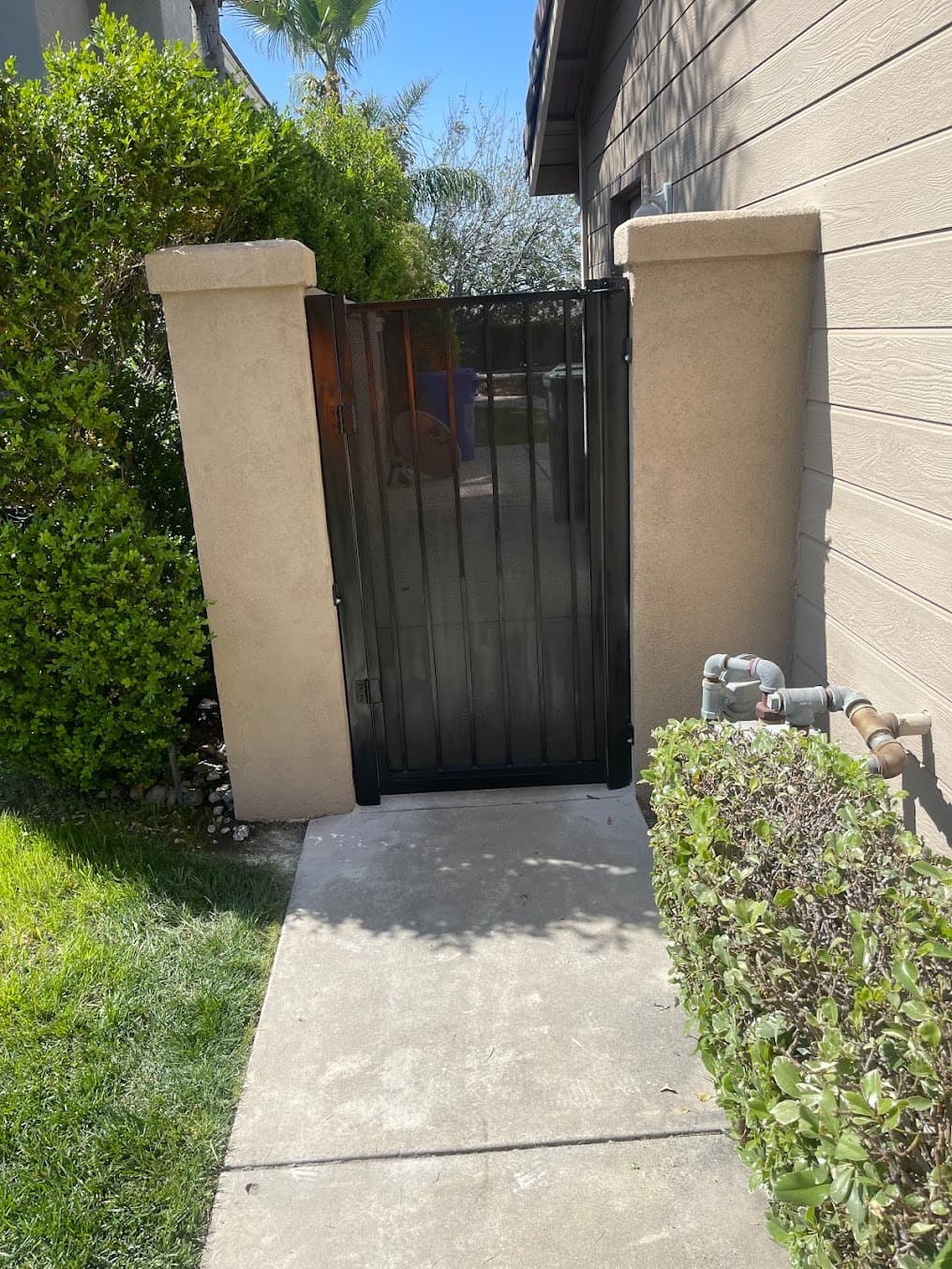
One of the most common avoidable mistakes in fence projects is treating the gates like a late-stage add-on.
The fence gets discussed first, the footage gets counted, and only later does someone remember the side-yard gate, driveway access, service entry, or pet path that actually controls how the property functions.
That is when projects start feeling awkward. A fence can be installed cleanly and still underperform if the gate was not planned at the same time.
Gates shape the whole layout
The moment a gate is involved, the project changes.
Now the estimate needs to think through:
- where people and vehicles move
- what width the opening needs
- how often the gate gets used
- whether the gate should match the fence material
- how the hardware and swing direction affect the daily use of the space
That is not a minor detail. It is one of the main layout decisions.
On many properties, the gate controls the actual lived experience of the fence more than the panels do. The fence defines the boundary. The gate determines how the boundary works.
Why gate planning changes the estimate
When the gate is planned early, the whole quote becomes more accurate.
The contractor can account for:
- extra framing and reinforcement
- latch and hardware placement
- clearance and swing
- slope near the opening
- whether the gate needs to match a privacy system, a chain link system, or a decorative frontage
When the gate is treated as an afterthought, those issues show up later as change orders, awkward compromises, or a finished opening that never feels quite right.
A good fence with a weak gate still feels weak
Even when the panels look fine, a poor gate decision can make the whole install feel awkward.
Common problems include:
- a gate too narrow for real use
- a gate placed in the wrong part of the run
- dragging or sagging after installation
- mismatch between gate and fence finish
- awkward swing into a walkway, driveway, or side-yard path
That is why the gate should be part of the first estimate conversation, not the last.
The right gate depends on how the property is used
Different properties need different gate logic.
For example:
- a side-yard gate may need to prioritize daily access and trash-can clearance
- a backyard gate may need to support pets, pool access, or maintenance equipment
- a driveway gate may need wider openings and more durable hardware
- a commercial access point may need a different level of control than a simple residential entry
The more clearly the use pattern is defined early, the better the gate performs after install.
Matching the gate to the fence matters
Gates should not feel like separate products attached to the fence later. They should belong to the same system.
That means the estimate should look at:
- material compatibility
- visual consistency
- hinge and post requirements
- transition points where the gate meets walls, columns, or corners
This is especially important on vinyl fence installation, wrought iron fence installation, and chain link fence installation, where the gate can either complete the system or make it feel pieced together.
Small mistakes at the gate create daily frustration
The reason gate planning deserves more attention is simple: people interact with the gate every day.
If the opening is awkward, the latch is inconvenient, or the swing fights the way the property is used, the mistake keeps showing up. The fence may still look fine in a photo, but the job feels weaker in real life.
That is why practical gate questions matter:
- Who uses this opening?
- How often is it used?
- What needs to pass through it?
- Should it prioritize speed, access, privacy, or security?
Those are not edge-case details. They are core layout decisions.
The best time to plan the gate
The best time to plan the gate is the same time the fence is planned.
That allows the estimate to solve:
- footage
- material direction
- gate count
- opening width
- post and reinforcement needs
- relationship to the property’s circulation
That is how a fence project becomes a cleaner whole instead of one main install plus a series of later fixes.