
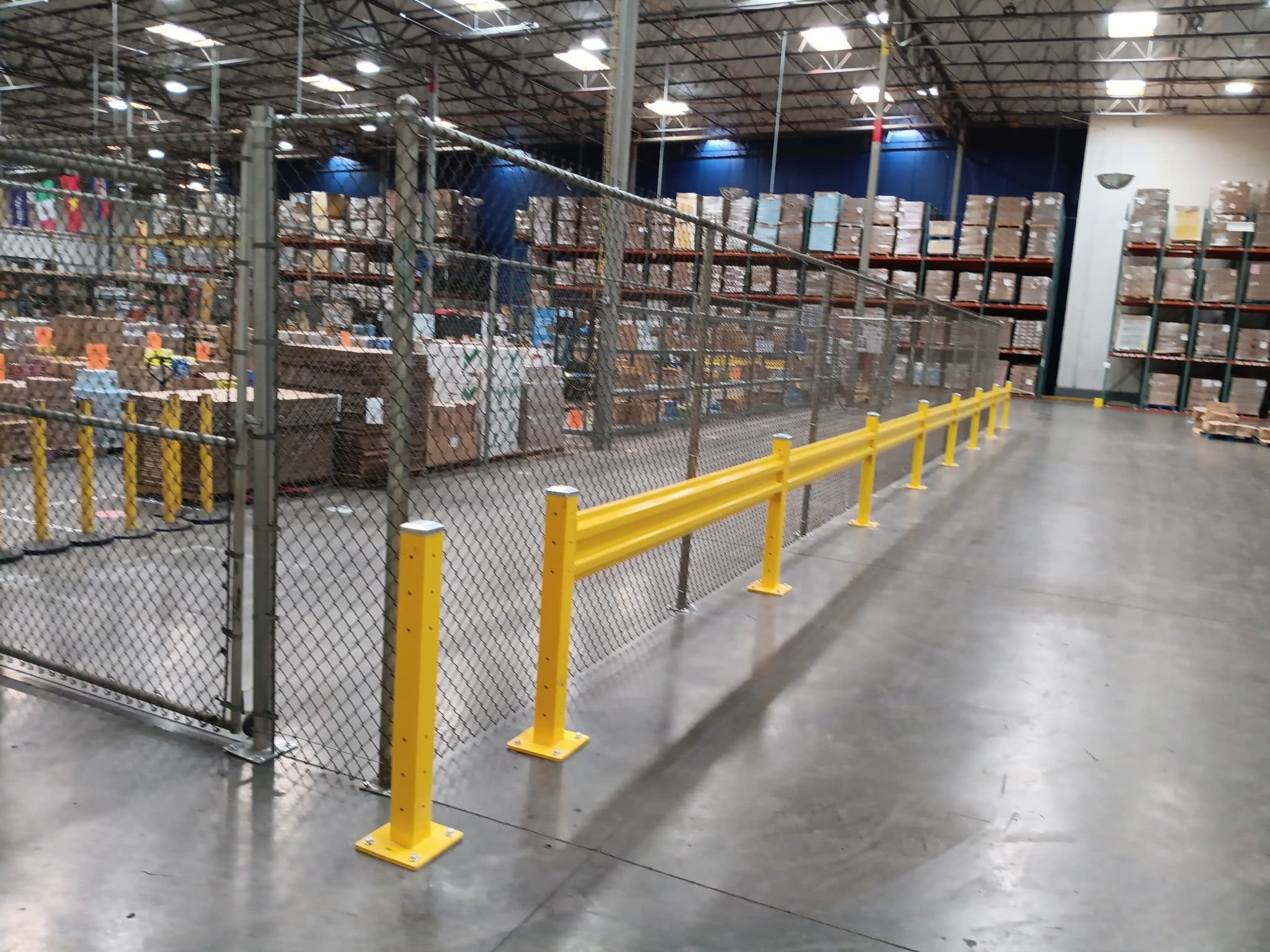
A commercial fence has to do more than mark the edge of a property. It may need to protect equipment, control vehicle and pedestrian access, reduce trespassing, support security cameras, and stand up to years of daily use.
That is where commercial chain link fence installation makes sense for many businesses.
Chain link gives you a durable physical perimeter without closing off visibility. It can cover large areas efficiently and can be upgraded with heavier wire, smaller mesh, taller heights, privacy screening, security gates, and other features based on the actual risk around your property.
The important part is getting the specification right. A basic boundary fence and a security-focused commercial fence may both use chain link, but they should not necessarily be built the same way.
Project-Guided by Empire Fence
Trusted fencing guidance that turns confusing material choices, property-line concerns, permits, access needs, gates, and installation requirements into clear next steps.
The goal is to help business owners, facility managers, and property managers understand security risks early, avoid preventable installation mistakes, and choose a fence that works with the way the property is actually used.
Quick Answer: Is Chain Link a Good Choice for Commercial Security?
Yes. Chain link is a practical commercial security option because it creates a strong physical boundary while maintaining visibility across the property.
Its security can be adjusted through fence height, wire gauge, mesh size, stronger posts and framework, gates, access-control features, privacy screening, and security toppings where appropriate.
For warehouses, storage yards, industrial properties, equipment areas, and other large sites, chain link can provide a strong balance between security, durability, visibility, and project cost.
Commercial Chain Link Fence Security at a Glance
Factor / What to Know
- Best for: Warehouses, industrial sites, storage yards, parking areas, equipment zones, utility areas, and large commercial perimeters
- Main advantage: Durable perimeter security without blocking sightlines
- Security level: Depends on height, gauge, mesh, framework, gates, and added security features
- Visibility: Open mesh supports supervision and camera coverage
- Privacy: Privacy slats or screening can be added where needed
- Maintenance: Generally low when the fence is properly installed and damage is repaired early
- Gate options: Pedestrian, swing, slide, and controlled-access configurations
- Main planning concerns: Property lines, traffic flow, gate width, underground utilities, site conditions, and local requirements
- Professional help matters most when: The project is large, gate-heavy, security-sensitive, on difficult terrain, or requires permits or specialized features
Why Chain Link Works So Well for Commercial Security
Chain link has stayed common around commercial and industrial properties for a simple reason: it solves several problems at once.
It creates a clear boundary, keeps the property visible, works across long fence runs, accepts a wide range of gate configurations, and can be strengthened when the site's security needs increase.
Creates a Visible Physical Barrier
A commercial fence does not need to be completely opaque to provide useful security.
In many situations, visibility is actually an advantage.
Employees, security staff, and cameras can continue to see activity on both sides of the fence. That makes it harder for someone to use the fence itself as cover.
The fence also creates an obvious boundary. Employees, visitors, delivery drivers, contractors, and the public can immediately see where general access ends and controlled property begins.
That matters around loading areas, equipment, outdoor inventory, utility equipment, employee-only zones, and vehicle yards.
Covers Large Perimeters Cost-Effectively
Commercial properties can involve hundreds or even thousands of feet of perimeter.
Material decisions become very different at that scale.
A fencing system that looks affordable across 50 feet may become expensive across an entire warehouse or industrial site. Chain link is often considered because it can provide practical coverage over long distances without requiring the cost or construction complexity of many solid-wall or decorative systems.
That does not mean choosing the cheapest possible specification.
The better approach is to spend money where it improves performance: stronger framework, the correct wire gauge, properly planned gates, stable terminal posts, and added security where the property actually needs it.
Supports Surveillance Instead of Creating Blind Spots
A solid fence offers privacy, but privacy can work in both directions.
It stops people outside from seeing in, but it can also stop employees or cameras from seeing activity immediately outside the perimeter.
Chain link keeps those sightlines open.
For businesses that already use lighting, cameras, security patrols, or staff observation, that visibility can make the fence part of a wider security system rather than an isolated barrier.
If certain sections of the property should remain hidden, privacy screening can be added selectively instead of making the entire perimeter opaque.
Delivers Durable, Low-Maintenance Protection
Commercial fencing is exposed to sun, rain, dust, vehicles, equipment, landscaping, and daily movement around gates.
Galvanized and coated chain link systems are designed to handle outdoor exposure with relatively modest maintenance.
You still need inspections. Gates can move out of alignment. Ties and fittings can loosen. Coatings can be damaged. Vehicles or equipment can bend posts or mesh.
But a small damaged section can often be addressed without replacing an entire fence line.
What Makes a Commercial Chain Link Fence Secure?
This is where many buying decisions go wrong.
People sometimes look at two chain link fences and assume they are essentially the same.
They are not.
The security of the finished system depends on how its components work together.
Wire Gauge and Mesh Size
Wire gauge affects the thickness and strength of the chain link fabric.
For a simple property boundary, a lighter specification may be enough. A commercial site protecting valuable equipment or controlling access may need heavier material.
Mesh size matters too.
Smaller openings can reduce the amount of space available for gripping or reaching through the fence. Depending on the application, that can make the fence harder to climb or manipulate.
This is why asking only for "a chain link fence" is not enough when comparing estimates.
Ask what wire and mesh are actually being proposed.
Fence Height
Height is another major part of the security plan.
A low fence can define a boundary and control casual movement. A taller fence creates a more significant obstacle.
But simply choosing the tallest fence available is not always the right answer.
The appropriate height depends on:
- what you are protecting;
- how exposed the property is;
- whether the fence is primarily for boundary control or stronger security;
- gate requirements;
- visibility;
- local rules and restrictions;
- nearby roads, sidewalks, and property lines.
For higher-security projects, additional top treatments may also be considered where they are appropriate and permitted.
Posts, Framework, and Tension
The mesh is only one part of the system.
A heavy chain link fabric attached to weak or poorly installed posts will not create a strong commercial fence.
Terminal posts at ends, corners, and gate openings handle significant loads. Line posts support the runs between them. Rails, tension bars, fittings, and ties all help the system stay aligned and tight.
Proper tension is important as well.
Loose fabric can sag, move, or create weak areas. Correctly tensioned fabric should form a consistent barrier without unnecessary slack.
This is one reason professional installation matters more as fence runs get longer or security requirements increase. A qualified fence contractor should be able to explain the proposed materials and how the framework is being matched to the property.
Gates and Access Control
A strong fence with a poorly planned gate still leaves a weak perimeter.
Commercial gate planning should account for how the site actually operates.
Consider:
- employee entrances;
- pedestrian traffic;
- delivery trucks;
- service vehicles;
- emergency access;
- equipment movement;
- driveway width;
- gate swing or slide clearance;
- locking requirements;
- frequency of use.
For some properties, a straightforward manually operated gate is enough.
Others may benefit from controlled-access systems, automated operators, keypads, card readers, or other gate hardware.
The key is to design access before installation begins rather than treating the gate as an afterthought.
Privacy Slats and Security Toppings
Privacy slats can reduce visibility into areas containing inventory, equipment, vehicles, or sensitive operations.
That can be useful, but more privacy is not automatically more security.
Before covering the fence, consider whether visibility is helping cameras or staff monitor the perimeter.
Screening also changes how wind interacts with a fence. Adding substantial privacy material to an existing fence should therefore be treated as an installation decision rather than simply a cosmetic upgrade.
Security toppings such as barbed wire or similar deterrents may be appropriate for certain commercial or industrial settings, but local requirements and the surrounding environment need to be considered before specifying them.
Where Commercial Chain Link Fencing Works Best
One of chain link's strongest advantages is versatility.
The same basic fencing system can be adapted to very different commercial properties.
Warehouses and Distribution Facilities
Warehouses usually have several security problems happening at once.
There may be loading docks, employee parking, trailer areas, outdoor storage, service entrances, HVAC equipment, and delivery traffic moving around the property.
Chain link can create the primary perimeter while gates organize where vehicles and people enter.
It can also separate restricted zones inside a larger property.
Storage and Equipment Yards
Outdoor equipment and materials can be difficult to secure because they may sit away from the main building.
A visible physical perimeter helps define the controlled area and reduces casual access.
For yards containing valuable inventory, the specification may need to go beyond a basic fence. Height, gauge, mesh, gate hardware, lighting, screening, and surveillance should be considered together.
Parking Lots and Commercial Properties
Not every commercial property requires high-security fencing.
Sometimes the main goals are:
- defining the property;
- directing traffic;
- protecting an employee area;
- separating parking from service areas;
- preventing vehicles or pedestrians from entering the wrong part of the site.
Chain link works well here because the level of security can be adjusted without completely changing fencing systems.
Utility and Restricted-Service Areas
HVAC systems, electrical equipment, mechanical areas, dumpsters, and service zones often need controlled access without being completely hidden from staff.
Chain link can create a practical enclosure while allowing technicians and property managers to visually inspect the area from outside.
Gates can then be positioned around the way maintenance crews actually access the equipment.
Construction and Industrial Sites
Construction and industrial properties often change over time.
Access routes move. Equipment arrives and leaves. New areas become restricted.
Chain link is useful in these environments because layouts can be designed around large working areas and practical access points.
For permanent industrial fencing, the specification should be based on the long-term security requirement rather than treating the project like temporary construction fencing.
How Commercial Chain Link Fence Installation Works
A good commercial chain link fence installation starts well before the first post goes into the ground.
The planning stage often determines whether the finished fence becomes an asset or a daily frustration.
1. Site Assessment and Security Planning
Start with what the fence needs to accomplish.
Ask:
- What needs protection?
- Where are the vulnerable areas?
- Where do employees enter?
- Where do trucks enter?
- Which areas need to remain visible?
- Which areas may need screening?
- Is the fence controlling people, vehicles, equipment, animals, or several of these?
- Could the property layout change later?
The answers influence almost every later decision.
2. Layout, Property Lines, Utilities, and Gates
Next comes the actual fence route.
Property boundaries should be understood before installation. Underground utilities need to be considered before digging. Driveways, slopes, corners, buildings, walls, and existing structures can all affect the layout.
Gate planning belongs in this stage.
A gate that is technically large enough but poorly positioned can cause problems every day.
For businesses planning fence installation in Ontario, CA, the same principle applies: the fence should be planned around property use, traffic, access, and applicable local requirements rather than simply following the easiest installation route.
3. Posts and Framework
Posts create the structure that carries the fence.
Ends, corners, and gate openings deserve particular attention because they handle more force than an ordinary line post.
Posts need to be aligned and set to suit the fence height, ground conditions, and project specification.
Once the posts are stable, rails and supporting components create the framework that will carry the chain link fabric.
4. Chain Link Fabric and Tensioning
The chain link fabric is attached to the framework and stretched across the fence line.
This step needs controlled tension.
Too loose and the fence can sag or move. Poor alignment can make an otherwise good material look unfinished.
The fabric is then secured using the appropriate tension components, ties, and fittings.
5. Gates, Hardware, and Security Features
Once the main perimeter is established, gates and accessories complete the functional system.
This can include:
- pedestrian gates;
- vehicle gates;
- locks and latches;
- automated access;
- privacy screening;
- additional security features.
Frequent-use commercial gates deserve particular attention. A gate may open hundreds or thousands of times during the life of the fence, so alignment, support, hardware, and clearance matter.
6. Final Inspection
Before considering the project complete, walk the fence line.
Check:
- post alignment;
- fabric tension;
- gate movement;
- latch operation;
- gaps around the perimeter;
- hardware;
- corners;
- transitions;
- access clearances;
- overall site cleanliness.
A final walkthrough is the right time to catch small issues before they turn into maintenance problems.
What Affects Commercial Chain Link Fence Cost?
There is no responsible one-price answer for every commercial chain link project.
The major cost factors include:
Total linear footage. Longer perimeters require more material and labor.
Fence height. Taller fences require more fabric and usually stronger supporting components.
Wire and mesh specification. A heavier or more security-focused system changes material costs.
Number and type of gates. Large commercial vehicle gates can substantially change the project compared with a simple fence run.
Gate automation or access control. Operators, controls, electrical work, and specialized hardware add complexity.
Site access. A clear open site is different from working around buildings, stored equipment, landscaping, or active operations.
Ground and slope. Grade changes and difficult soil can affect installation.
Privacy screening. Slats or other screening add material and may change structural considerations.
Removal work. Existing fences, posts, concrete, vegetation, or other obstacles may need to be removed first.
Security upgrades. Taller systems, specialized mesh, toppings, and additional hardware change the project scope.
A good estimate should tell you what is included—not just give you a final number.
When Chain Link Is the Right Choice—and When It Is Not
Chain link is worth serious consideration when the priorities are:
- security;
- visibility;
- large perimeter coverage;
- controlled access;
- durability;
- relatively low maintenance;
- practical project cost;
- flexibility for future changes.
But it is not automatically right for every commercial property.
If the front of a customer-facing building needs a highly architectural appearance, ornamental or another decorative metal system may fit better.
If complete privacy is the first priority, a solid fencing system may make more sense than covering every foot of chain link with screening.
And if the facility has unusually high security requirements, ordinary commercial chain link may need significant upgrades or may form only one part of a wider security system.
The right question is not:
"Is chain link good?"
It is:
"Does this chain link specification solve the security problems on this property?"
Common Commercial Chain Link Fence Mistakes
Choosing Only by Price
Two estimates may both say "chain link fence" while specifying different wire, posts, framework, gates, and finishes.
Compare the actual system.
Under-Specifying the Gates
The entrance is one of the hardest-working parts of a commercial fence.
Plan gate width, hardware, support, and traffic before construction.
Ignoring How the Property Operates
A fence can technically secure the property while making deliveries, employee access, or maintenance unnecessarily difficult.
Design around daily use.
Adding Privacy Without Considering Visibility
Blocking views can protect equipment from people outside, but it can also reduce sightlines for employees and cameras.
Use privacy where it solves a real problem.
Ignoring Property Lines and Underground Utilities
Moving a fence after posts have been installed is much more expensive than confirming the layout beforehand.
Treating Every Part of the Perimeter the Same
The front entrance, rear storage yard, employee parking area, loading zone, and utility section may not require identical fencing.
A good design puts stronger security where the risk is higher.
How to Maintain a Commercial Chain Link Fence
Chain link does not require complicated maintenance, but periodic inspections can prevent small problems from growing.
Walk the perimeter and look for:
- bent or damaged mesh;
- loose ties and fittings;
- leaning posts;
- corrosion around damaged coatings;
- vegetation growing through the fence;
- impact damage near driveways;
- gate sag;
- loose hinges;
- latches that no longer line up;
- evidence of tampering.
Pay extra attention to gates and vehicle areas.
Those locations experience far more movement and accidental impact than a quiet fence line.
If the fabric has been hit but the main framework is still sound, a targeted repair may sometimes make more sense than replacing the entire system.
Frequently Asked Questions About Commercial Chain Link Fencing
Is chain link fencing secure enough for a business?
For many commercial properties, yes.
Chain link creates a visible physical boundary and can be adapted to different security levels using heavier material, different mesh, taller heights, stronger framework, gates, access controls, privacy screening, and permitted security enhancements.
The right specification depends on what the property is protecting.
What gauge chain link is best for commercial security?
There is no single gauge that is correct for every commercial project.
Higher-security applications generally call for stronger fabric than a basic boundary fence. The surrounding framework, posts, mesh size, fence height, and gates also matter.
Do not choose gauge in isolation.
How tall should a commercial chain link fence be?
The appropriate height depends on the purpose of the fence.
A property that mainly needs boundary definition may not need the same height as a warehouse, equipment yard, or higher-security industrial facility.
Local requirements, gate design, visibility, and the site's risk level should all be considered.
Can privacy be added to commercial chain link fencing?
Yes.
Privacy slats or screening can reduce visibility through selected sections of a chain link fence.
Use them strategically. Complete screening may reduce useful sightlines and can also increase wind load on the fence.
Can chain link fencing work with security gates?
Yes.
One of chain link's strengths is its ability to work with pedestrian and vehicle gates.
Depending on the property, gates may also be paired with automated operators or controlled-access equipment.
The gate system should be designed around traffic volume, opening width, security needs, and available clearance.
How long does commercial chain link fencing last?
A properly specified and maintained chain link fence can provide long service life.
Longevity depends on material quality, protective coating, climate, installation, vehicle exposure, maintenance, and whether damaged sections are repaired promptly.
Galvanized and coated systems help protect the underlying steel from corrosion.
Should a commercial chain link fence be professionally installed?
Simple small enclosures can sometimes be manageable as DIY work.
Large commercial properties are different.
Long runs, heavy fabric, taller fences, slopes, vehicle gates, precise tensioning, property boundaries, utility considerations, and security requirements can make installation much more demanding.
Professional help becomes especially valuable when structural failure, gate problems, incorrect placement, or downtime could cost more than the installation savings.
Plan Your Commercial Security Fence With Clear Next Steps
A commercial fence should match the way your property works, not simply follow a standard template.
Before requesting a quote, gather the approximate perimeter length, desired height, number of gates, vehicle-access needs, photos of the site, and a short explanation of what you are trying to protect.
From there, the material and security decisions become much easier.
Empire Fence can help evaluate commercial chain link fencing for properties that need durable boundary control, visibility, gates, and practical security without making the project more complicated than it needs to be.
The best commercial chain link fence installation is not necessarily the heaviest or most expensive system. It is the one that puts the right level of security in the right places and continues to work with the property every day.