
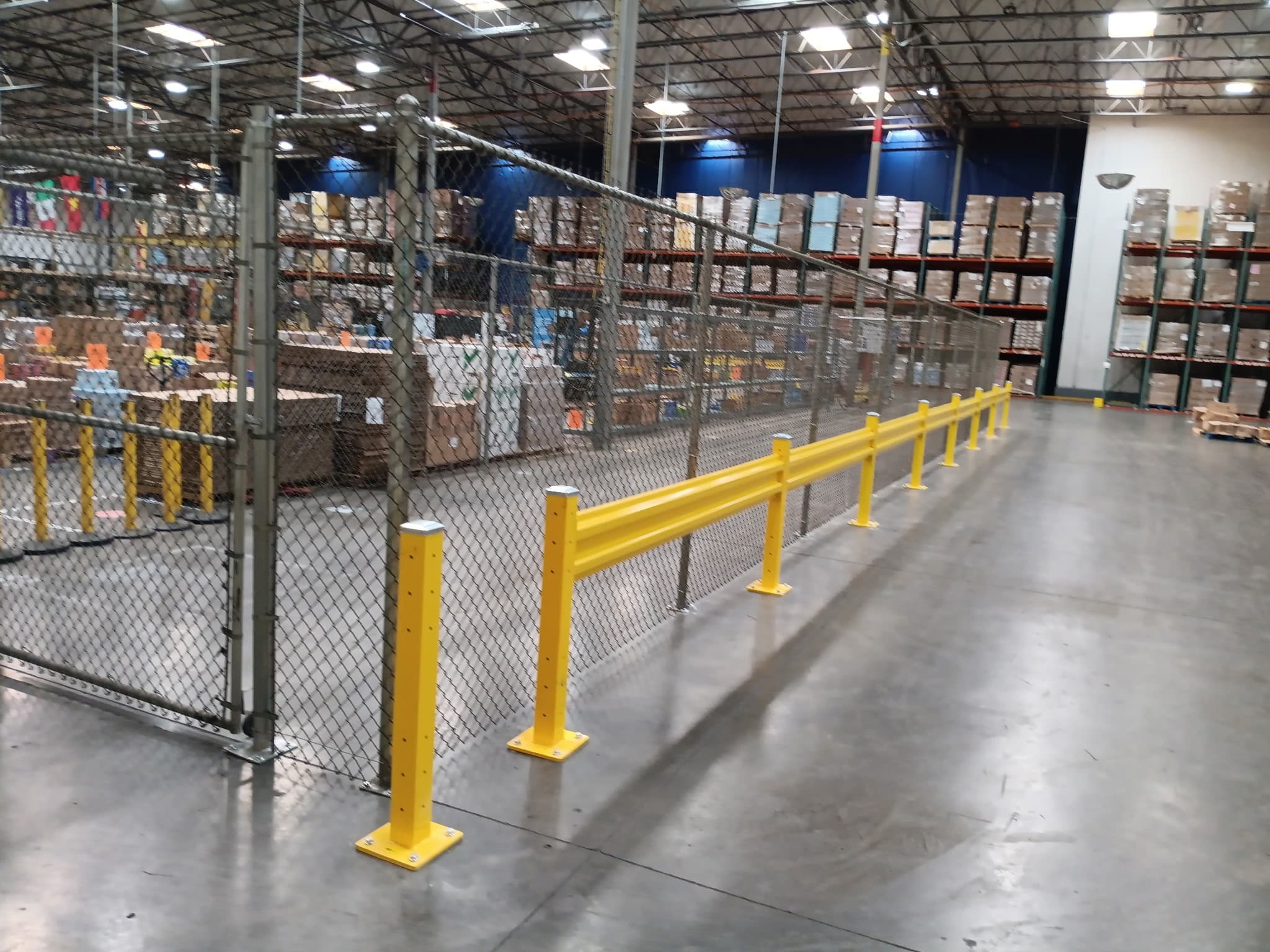
A commercial fence does more than mark the edge of a property. It can protect equipment, control vehicle access, guide customers, screen work areas, and improve how the property looks from the street.
But the wrong fence can create new problems. A poorly planned gate may slow deliveries. A solid fence may block security-camera views. Weak posts may fail under daily use. A project started without checking permits, boundaries, or underground utilities may face delays and added costs.
The best commercial fencing plan begins with one question: What does this property need the fence to do every day?
Quick Answer
Business owners should choose commercial fencing based on security risk, daily traffic, privacy, appearance, maintenance, local rules, and gate use. Before installation, confirm the property line, permit requirements, underground utilities, access points, and written project scope. Compare commercial fencing contractors on commercial experience and installation details, not price alone.
At a Glance
- Decide whether the main goal is security, privacy, access control, appearance, or a mix.
- Map employee, customer, delivery, and emergency-access points.
- Compare materials by strength, visibility, maintenance, and lifetime cost.
- Plan vehicle and pedestrian gates before finalizing the fence line.
- Confirm property boundaries, permits, and underground utilities.
- Decide whether existing damage can be repaired.
- Request a written quote with materials, dimensions, gates, cleanup, and exclusions.
- Verify the contractor's experience with commercial properties.
What Should Commercial Fencing Do for Your Business?
A commercial fence should solve a clear property problem. Start with that problem before choosing a style or material.
Protect Assets and Restricted Areas
Warehouses, equipment yards, storage facilities, apartment properties, construction sites, and industrial businesses may need a clear physical barrier around valuable or restricted areas.
The fence should make unauthorized entry harder while keeping the property visible enough for employees, cameras, or security staff to monitor.
A taller fence is not automatically a better fence. Gate strength, post stability, visibility, surrounding terrain, and access-control habits also affect security.
Control Vehicle and Pedestrian Access
Many commercial properties have several types of visitors:
- Employees
- Customers
- Delivery drivers
- Vendors
- Maintenance teams
- Emergency responders
The fence layout should guide each group toward the correct entrance.
A business with regular truck deliveries may need a wide sliding or rolling gate. A retail property may need a separate pedestrian entrance. A storage yard may need controlled access without blocking large vehicles.
Good access planning makes the property safer and easier to use.
Provide Privacy and Visual Screening
Some businesses need to hide:
- Dumpsters
- Mechanical equipment
- Loading areas
- Outdoor inventory
- Employee work areas
- Utility equipment
- Materials stored outside
A solid wood, vinyl, metal-panel, or privacy-slat fence may help. However, solid fencing can also create blind spots.
Before choosing full privacy, look at where employees, cameras, drivers, and customers need clear sightlines.
Support a Professional Property Appearance
The fence is often one of the first things a visitor sees.
A damaged, leaning, rusted, or poorly matched fence can make the property feel neglected. A straight, well-planned fence can make the same site appear more organized and secure.
Businesses with customer-facing entrances may place more value on ornamental metal or wrought iron. Industrial properties may place more value on strength, coverage, and easy maintenance.
The best choice fits both the operation and the building.
Start With Your Property Risks, Not the Fence Material
Many owners begin by asking whether to get chain link or wrought iron. That question comes too early.
First, walk the property and identify what the fence must protect, control, hide, or improve.
Questions to Answer Before Requesting Quotes
- What are we trying to prevent?
- Which assets need protection?
- Who should be allowed into the property?
- Where should vehicles enter and exit?
- Will delivery trucks need turning or waiting space?
- Do customers need a separate pedestrian entrance?
- Should people outside the property be able to see in?
- Will the fence affect cameras, signs, doors, ramps, or walkways?
- Are there slopes, concrete, asphalt, landscaping, or drainage paths?
- Is the existing fence worth repairing?
- Will installation interrupt normal business operations?
- Who is responsible for permits and utility marking?
These answers give the contractor a real scope instead of a rough request for a fence around the property.
Why the Same Fence Does Not Work for Every Business
A restaurant may want to screen a service area without making the entrance feel closed.
A warehouse may need long perimeter coverage with controlled truck access.
An office property may need visible security that still looks welcoming.
A storage yard may need taller fencing, strong gates, and fewer entry points.
A school or childcare property may need controlled pedestrian access and hardware that supports daily supervision.
The right design depends on how the property operates.
Best Commercial Fence Types for Different Business Needs
Each material has strengths and limits. The best option may also involve using different materials in different parts of the property.
Chain-Link Fencing
Chain link fencing is commonly used around warehouses, equipment yards, parking areas, construction sites, storage facilities, industrial properties, and utility areas.
Its open design keeps the property visible. That can help employees and cameras observe activity on both sides of the fence.
Chain link can also cover long fence lines without the material cost of many decorative systems. Coatings, privacy slats, stronger wire, added height, and suitable security features can change its performance.
The trade-off is appearance and privacy. Standard chain link may not provide the polished frontage some businesses want.
Wrought-Iron and Ornamental Metal Fencing
Wrought-iron and ornamental metal fencing work well where security and appearance both matter. Common applications include office buildings, apartment properties, retail entrances, hotels, customer-facing commercial properties, and decorative property frontage.
The vertical design can discourage climbing while keeping sightlines open.
Metal fencing must still be matched to the site. Check the spacing, coating, post system, gate hardware, and long-term exposure to weather and irrigation.
Steel and Commercial Metal Fencing
Commercial metal fencing systems can provide stronger boundaries than light residential products. They may be appropriate for high-use gates, industrial properties, equipment enclosures, storage yards, strong perimeter barriers, and modern commercial buildings.
Ask what type and thickness of material will be installed. The estimate should identify the material, finish, posts, rails, panels, hardware, and gate construction.
Vinyl Privacy Fencing
Vinyl fencing can be useful for dumpster screening, service-area screening, pool or amenity areas, customer-facing privacy, and lower-risk commercial boundaries.
It requires less finish maintenance than wood and provides a clean, solid appearance.
However, vinyl is not the first choice for every high-security or impact-prone site. The panel and post system must be suitable for the property's wind exposure, daily use, and surrounding activity.
Wood Fencing
Wood fencing can create warmth, privacy, and a more natural appearance. Businesses may use it around patios, restaurants, shared outdoor areas, service spaces, small commercial properties, and decorative screening.
Wood is easier to customize than many prefabricated systems, but it needs ongoing attention. Moisture, irrigation, insects, sun, ground contact, and damaged boards can shorten its useful life.
Ask about the wood species, post material, finish, ground clearance, and maintenance expectations.
Using More Than One Fence Material
A business does not always need the same fence around the entire site. A practical layout might use ornamental metal at the public entrance, chain link along the rear boundary, solid privacy fencing near dumpsters, stronger metal around equipment, and a separate pedestrian gate near the office.
This approach places the budget where appearance or security matters most.
Commercial Gates and Access Control Need Early Planning
A fence can be strong while the gate remains weak, awkward, or unreliable. Gate planning should happen before the fence layout is approved.
Vehicle Gates
Consider vehicle width, truck turning space, driveway slope, gate opening direction, space for a sliding gate, employee traffic, delivery schedules, emergency access, manual or powered operation, and where vehicles will wait while the gate opens.
A large gate creates more load than a standard pedestrian gate. Posts, frames, rollers, hinges, tracks, and hardware must be selected for the gate's size and daily use.
Pedestrian Gates
A pedestrian gate should be placed where people naturally approach the property. Think about employee entrances, customer walkways, parking areas, accessibility, self-closing requirements, locks and latches, exit needs, lighting, and visibility from the building.
Do not make employees or customers walk through a vehicle gate unless the site is specifically designed for shared access.
Manual Versus Automated Access
Automation may help a property manage regular vehicle traffic, but it adds planning needs. The project may involve power, operators, safety devices, keypads, remotes, card readers, telephone entry, vehicle detection, manual-release procedures, and ongoing service.
The fence contractor should explain which parts of the gate system are included and whether another trade is needed for electrical or access-control work.
Check Permits, Property Lines, and Underground Utilities
Do not approve post locations until these three areas have been checked.
Local Permit and Height Requirements
Fence rules are not the same in every city.
The City of Ontario states that a building permit is required for several common fences and gates over three feet high, including chain-link, wrought-iron, and wood fences. Businesses planning a fence installation in Ontario, CA should confirm the current requirements for their property, zoning, fence type, gate, and proposed height before work begins.
Ask the contractor whether a permit is required, who will prepare the plans, who will submit the application, whether permit fees are included, whether an inspection will be required, whether the gate needs a separate review, and whether there are restrictions near driveways, streets, or corners.
Do not accept a universal answer that fences never need permits.
Property Boundaries and Easements
An old fence does not always prove the legal property line. Before moving or replacing a boundary fence, review available records and determine whether a survey or property-line verification is needed.
Also check for utility easements, access easements, drainage areas, shared driveways, public right-of-way, fire-access paths, and required setbacks.
A small layout error can become expensive once posts and concrete are installed.
Utility Marking Before Post Excavation
Fence installation involves digging multiple post holes. Underground electrical, gas, water, communication, or other utility lines may cross the planned fence path.
In Southern California, excavators should contact 811 before digging and provide the required notice before excavation begins. The planned work area should be clearly marked before the utility-location request.
What Affects Commercial Fence Installation Cost?
There is no honest universal price for every commercial fence. A useful estimate must reflect the actual site and project scope.
Fence Length, Height, and Material
The basic cost is affected by total linear footage, fence height, material, material grade, post size, post spacing, footing requirements, coating or finish, privacy additions, and security additions.
A low price per foot may exclude gates, demolition, concrete work, permits, or difficult sections.
Gates, Automation, and Access Systems
Gates can represent a significant part of the project because they require stronger support and moving hardware. Cost may change based on gate width, gate height, swinging or sliding design, number of gate leaves, manual or powered operation, heavy-duty frames, tracks or rollers, operators, keypads or readers, safety equipment, and electrical work.
Ask for gate costs to be separated clearly in the estimate.
Terrain, Demolition, and Site Access
Installation may cost more when the crew must work around concrete, asphalt, slopes, retaining walls, tight access, landscaping, irrigation, existing foundations, active parking areas, customer traffic, and underground obstructions.
Removing and hauling away an old fence should also be included or clearly excluded.
Maintenance and Lifetime Cost
The lowest installation price is not always the lowest long-term cost. Compare cleaning, painting, staining, rust treatment, board replacement, gate adjustments, hardware replacement, damage from vehicles or equipment, and ease of replacing one damaged section.
A fence that fits the daily use of the property will usually be easier to maintain than a cheaper system installed in the wrong environment.
Common Commercial Fencing Mistakes to Avoid
Choosing the Material Before Understanding the Site
A popular material is not automatically right for the property.
Treating the Gate as an Add-On
The gate often handles more movement and stress than the fence line. It needs its own planning.
Blocking Useful Visibility
Full privacy can interfere with cameras, drivers, staff supervision, and customer sightlines.
Ignoring Daily Traffic
A gate that works during a quiet site visit may fail during morning deliveries or shift changes.
Accepting an Incomplete Quote
A low total may leave out demolition, permits, disposal, gate hardware, automation, or surface repair.
Failing to Confirm the Boundary
Replacing a fence in the same location does not guarantee that it is on the correct line.
Skipping Utility Marking
Post excavation should not begin until the work area has been marked and underground utilities have been located.
Selecting Residential-Grade Products for Heavy Use
A commercial gate or fence may face frequent operation, contact from equipment, larger openings, and longer unsupported sections. Ask whether the proposed materials and hardware are appropriate for commercial use.
Comparing Price Without Comparing Scope
Two quotes may describe completely different projects. One may include heavier posts, better hardware, removal, cleanup, and permits. Another may include only basic installation.
Should You Repair or Replace a Commercial Fence?
Damage does not always require full replacement. A site inspection should determine whether the problem is limited to one area or affects the structure of the entire fence.
When Repair May Be Enough
Timely commercial fence repairs may be practical when one or two posts are damaged, a gate has started sagging, hinges or latches are worn, a few boards or panels are broken, a short section was hit by a vehicle, the fence is generally straight and stable, the material is still available, and the remaining fence has useful life left.
A focused repair can restore safety and function without replacing the entire perimeter.
When Replacement Is the Safer Choice
Replacement may be more practical when many posts are loose, rusted, rotten, or leaning, the fence repeatedly needs repairs, the gate opening is poorly designed, the material is no longer suitable for the property, the fence does not provide the required privacy or security, large sections have failed, repairs would leave an uneven or weak system, or the business needs a different layout.
Ask the contractor to explain both options when both are possible.
How to Compare Commercial Fencing Contractors
A commercial fence should be compared as a complete project, not as a single price.
Verify the Contractor and Commercial Experience
California has a specific C-13 fencing-contractor classification covering the construction, alteration, and repair of fences and gates, excluding masonry walls.
Ask each contractor whether they handle commercial properties, whether they have installed this type of fence and gate, who will supervise the work, whether the license is current and appropriate for the scope, whether insurance information is available, who handles permits, whether subcontractors will be used, and whether they can explain the installation method.
Experience with a small residential fence does not automatically prove experience with large gates, long commercial runs, asphalt excavation, access control, or active business sites.
Compare the Written Scope, Not Just the Total Price
Every quote should identify fence material, height, approximate length, post type and size, post spacing, footing or anchoring method, rails or panels, coating or finish, gate dimensions, gate frame and hardware, locks or latches, demolition, haul-away, surface repair, permits, utility-marking responsibility, cleanup, warranty, exclusions, and payment schedule.
When one quote is much lower, compare the missing details before assuming it is a better deal.
Ask About Materials, Gates, Cleanup, and Warranty
- Is the proposed product residential grade or commercial grade?
- How will posts be set in soil, concrete, or asphalt?
- How will slopes and grade changes be handled?
- What keeps the gate from sagging?
- What hardware is included?
- Is powered-gate work included?
- Who repairs disturbed asphalt, concrete, or landscaping?
- What maintenance will the fence need?
- What is covered by the workmanship warranty?
- What could change the final price?
Clear answers are usually a better trust signal than a polished sales pitch.
Commercial Fence Planning Checklist
Property Information
- Property address and type
- Approximate fence length
- Available site plan
- Known property markers and existing surveys
- Easement information
- Photos of the current fence and site
Operational Information
- Employee schedules and customer entrances
- Delivery schedules and vehicle sizes
- Emergency-access needs
- Restricted areas
- Peak traffic times
- Areas that must remain open during installation
Fence Requirements
- Main goal and desired height
- Preferred material and privacy level
- Security level
- Gate locations and sizes
- Manual or automated operation
- Required completion date
Quote Requirements
- Detailed written scope
- Material and gate specifications
- Permit responsibility
- Demolition and disposal
- Surface restoration and cleanup
- Warranty and payment schedule
- List of exclusions
Frequently Asked Questions
What is the best type of commercial fence?
There is no single best material for every business. Chain link works well for visible, cost-conscious perimeter coverage. Ornamental metal balances security and appearance. Solid metal, vinyl, or wood may provide privacy. The correct choice depends on risk, traffic, visibility, maintenance, and budget.
How much does commercial fencing cost?
Cost depends on total length, height, material, posts, footings, terrain, demolition, gates, automation, coatings, access, permits, and cleanup. A site-specific written estimate is more useful than a broad price-per-foot figure that leaves out major project details.
Do I need a permit for a commercial fence?
Possibly. Requirements vary by city, zoning, material, location, and fence or gate height. Some cities require permits for fence types and heights that may be exempt elsewhere. Confirm the current requirements with the local building or planning department before installation.
How tall should a commercial security fence be?
Height should be based on the site's security goal, local limits, visibility needs, gate design, and surrounding conditions. A taller fence may improve deterrence, but weak gates, climbable objects, poor lighting, or incorrect placement can still reduce security.
How long does commercial fence installation take?
The schedule depends on material availability, project length, demolition, concrete curing, gate fabrication, automation, permits, inspections, weather, and site access. The contractor should separate approval and material lead time from the expected number of working days on-site.
Can a damaged commercial fence be repaired?
Yes, when damage is limited and the remaining fence is stable. Posts, panels, rails, boards, hinges, latches, rollers, and short damaged sections may be repairable. Replacement may be better when failures are widespread or the original design no longer meets the property's needs.
What should a commercial fence quote include?
The quote should identify materials, dimensions, posts, footings, gates, hardware, coatings, demolition, disposal, permits, cleanup, surface restoration, warranty, payment terms, and exclusions. Avoid approving a quote that only states a material and total price.
Plan Your Commercial Fence With Clear Next Steps
A successful commercial fence begins before the first post hole is dug.
Define what the fence must accomplish. Walk the site. Map traffic. Plan the gates. Confirm permits, boundaries, and utilities. Then compare written scopes from contractors who understand commercial installation.
Empire Fence can evaluate the existing conditions, discuss repair and installation options, and prepare a clearer project estimate based on the property's real needs.
The goal is not simply to install more fencing. The goal is to build a boundary that improves security, access, appearance, and daily use without creating avoidable problems later.
Contact Empire Fence with your property details and site photos to get started.