
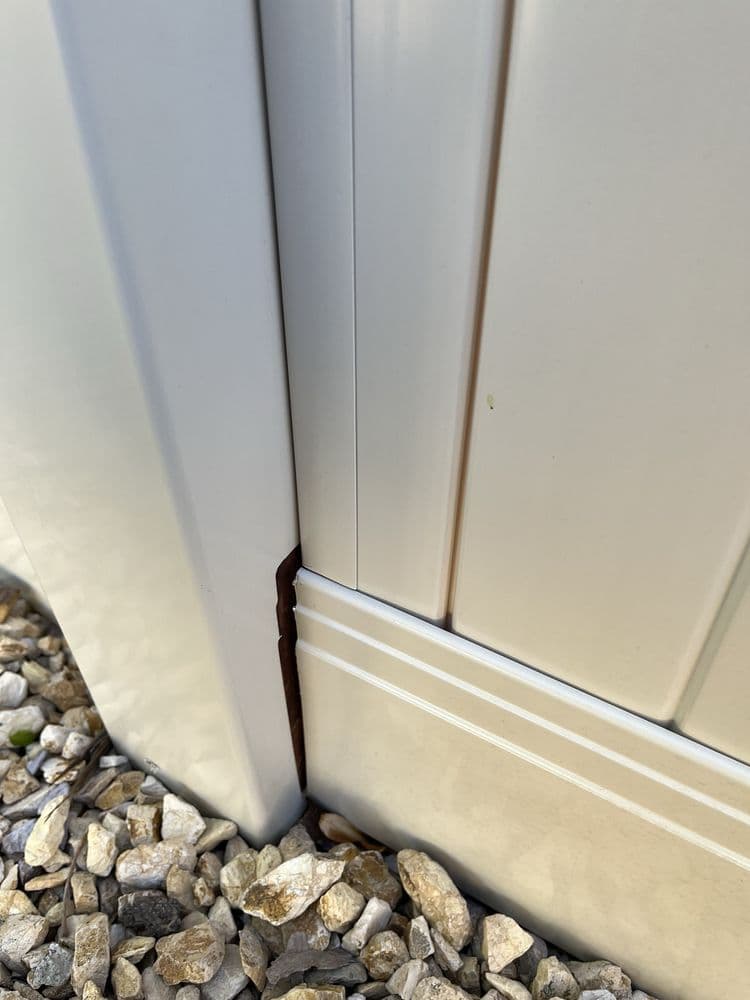
A damaged fence creates a frustrating question: should you pay for another repair or put that money toward a new fence?
Comparing fence installation cost versus fence repair cost is not as simple as choosing the lower estimate. A small repair is usually cheaper today. However, replacing a fence can provide better value when posts are failing, damage has spread, or the same problems keep returning.
The right choice depends on the condition of the full fence line, not only the broken piece you can see.
Quick Answer: Is Fence Repair or Installation Cheaper?
Fence repair is normally cheaper when the damage is limited to a board, panel, post, hinge, or small section and the rest of the fence remains structurally sound.
New installation may cost less over the long term when multiple posts are unstable, rot or rust is widespread, repairs are becoming frequent, or the fence no longer provides the privacy, security, or access the property needs.
Published national cost guides currently place many standard fence repairs around $300 to $900, with minor work sometimes costing $100 to $300 and major structural work reaching $2,500. Published installation ranges vary more widely, with common national guides reporting roughly $1,860 to $7,000, depending on project size, material, height, and scope.
These are planning ranges, not local quotes.
Fence Installation Cost vs. Fence Repair Cost at a Glance
| Project condition | Typical planning range | Usually the better fit | |---|---|---| | One loose board, latch, or small crack | $100–$300 | Repair | | One panel, one or two posts, or moderate gate problem | $300–$900 | Repair, if surrounding sections are sound | | Multiple posts or a large damaged section | $900–$2,500 | Inspection needed | | New fence installation | Roughly $1,860–$7,000 for many projects | Installation or full replacement | | Repeated repairs across an aging fence | Varies | Replacement may cost less over time |
These figures help understand the size of the decision, not predict the final price. A short wrought-iron repair can cost more than a longer wood repair. A simple chain-link installation can cost much less than a tall privacy fence with several gates.
How Much Does Fence Repair Cost?
Fence repair costs are based on what failed, why it failed, and how much surrounding material must be disturbed to complete the work properly.
The visible problem may be only one leaning panel, but the real cause could be a rotten post below the soil line. A gate may appear to need new hinges when the supporting post has moved. That is why a useful repair estimate should examine the damaged component and the structure around it.
Minor Fence Repairs
Minor repairs may include:
- Reattaching a loose board
- Replacing a few pickets
- Tightening hardware
- Filling a small crack
- Adjusting a latch
- Correcting a light gate-alignment problem
- Treating a small area of surface rust
These projects are usually worth repairing when the fence is otherwise stable.
A small fix should still address the cause. Reattaching a board will not solve a drainage problem that keeps the lower part of the fence wet. Tightening a hinge will not permanently correct a gate post that is leaning.
Standard Fence Repairs
A standard repair may involve:
- Replacing one full panel
- Resetting or replacing one or two posts
- Repairing a sagging gate
- Replacing a rail
- Rebuilding a damaged section
- Repairing moderate rot or rust
- Correcting storm or impact damage
Many standard fence repairs fall between $300 and $900. National averages hover near $500, although material, labor, access, and damage severity can move the price higher or lower.
This is where material matching becomes important. A new wood panel may look brighter than the weathered panels beside it. An older vinyl profile or color may no longer be easy to source. The repair can be structurally successful while still remaining visible.
Major and Structural Fence Repairs
A repair becomes more complicated when it involves:
- Several failed posts
- A long leaning section
- Widespread wood rot
- Extensive metal corrosion
- Multiple damaged panels
- A fallen fence run
- A heavy or unstable gate
- Damage around a pool or high-security area
- Movement caused by soil, roots, drainage, or grade
At this stage, compare the repair with partial or full replacement instead of automatically approving another patch.
A professional inspection should answer:
- Are the remaining posts sound?
- Is the damage isolated or spreading?
- Can the material be matched?
- How many years is the repair likely to add?
- Will another section probably fail soon?
- Does the repaired fence still meet the property's needs?
How Much Does New Fence Installation Cost?
A new fence has a larger upfront price because it involves far more than attaching new panels.
The work may include layout, measurements, utility checks, removal, excavation, post setting, concrete, rails, panels, gates, hardware, cleanup, and inspection. The final cost changes according to the material and the conditions on the property.
Cost Per Linear Foot
Many fence installations are estimated by linear foot, but the per-foot figure is only a starting point.
National ranges of approximately $6 to $50 per linear foot are commonly reported. Material selection creates much of that difference. Height, post spacing, gate requirements, terrain, and project length also matter.
A short project can sometimes cost more per foot than a long, straightforward run because mobilization, equipment, layout, and minimum labor are still required.
Labor, Materials, and Site Preparation
Your installation price may change based on:
- Total linear footage
- Fence height
- Number and depth of posts
- Wood, vinyl, chain link, wrought iron, or another material
- Privacy or open design
- Flat or sloped ground
- Rocky or difficult soil
- Tree roots
- Limited equipment access
- Connections to walls or existing fence sections
- Custom fabrication
- Commercial security requirements
Labor is not limited to installing panels. Correct post placement, straight fence lines, drainage, gate clearance, and transitions often determine how the fence performs years later.
Gates, Removal, and Other Additions
The quoted fence price may not automatically include:
- Removal of the existing fence
- Hauling and disposal
- Pedestrian gates
- Driveway gates
- Automatic gate equipment
- Decorative post caps
- Staining or painting
- Permit charges
- Survey work
- Landscaping restoration
- Special access equipment
Ask for these items to be listed separately. That makes it easier to compare two estimates that may appear similar but include different work.
Fence Repair and Installation Costs by Material
Wood Fence
Wood is often repair-friendly because individual boards, rails, pickets, and panels can be replaced.
Common problems include rot at the bottom of posts, warped boards, splitting, missing pickets, loose rails, insect damage, and peeling stain or paint.
Repair normally makes sense when the damage is confined to a small area and the posts are healthy. Replacement becomes more attractive when rot appears across several posts or rails. New boards attached to a failing frame will not create a lasting repair.
Vinyl Fence
Vinyl fence panels do not rot like wood, but they can crack after impact or movement.
A single damaged section may be replaceable. The challenge is finding a panel, profile, and color that match the original fence. Sun exposure can also make the existing material look different from a new replacement piece.
If the posts remain stable and the matching material is available, repair may be practical. If several sections have cracked or shifted, partial or full installation may produce a cleaner result.
Chain-Link Fence
Chain link fences are often good candidates for localized repairs.
Repairable problems may include torn or bent mesh, a damaged top rail, loose tension wire, bent posts, gate alignment, and missing hardware.
The condition of the terminal and line posts matters. Replacing mesh alone will not correct a run supported by loose or leaning posts.
Metal and Wrought Iron Fence
Metal fencing and wrought-iron repairs may require cutting, welding, straightening, grinding, rust treatment, or refinishing.
A decorative section can often be repaired, but custom patterns and finish matching may increase labor. Replacement should be considered when corrosion has weakened several structural points or the fence no longer provides safe perimeter control.
When Is Fence Repair the Better Value?
The Damage Is Isolated
One broken panel, a small patch of rust, a few missing boards, or one damaged post does not normally justify removing an otherwise healthy fence.
Storm or impact damage may also be repairable when it affects one area and the remaining fence is stable.
The Posts and Rails Are Still Sound
Posts and rails carry the fence. If they remain solid, individual boards, panels, pickets, and hardware can often be repaired or replaced successfully.
When posts move easily, show rot near the ground, or fail in several areas, the repair may only delay a larger project.
The Fence Still Meets Your Needs
Repair makes sense when the existing fence still provides the required privacy, security, pet containment, child safety, boundary control, gate access, and appearance.
There is little value in repairing a fence that will remain too short, too open, incorrectly placed, or difficult to use.
When the decision is unclear, a qualified fence contractor should inspect the entire run, not only the most visible damaged area.
When Does New Fence Installation Cost Less Over Time?
Several Posts or Sections Are Failing
Multiple failed posts usually point to a fence-wide problem rather than several unrelated accidents.
The remaining posts may be the same age, made from the same material, and exposed to the same soil and moisture. Repairing them one by one can create a cycle where another section fails soon after the last one was corrected.
Repairs Keep Returning
Look at what you have spent over the last few years, including post repairs, panel replacement, gate adjustments, staining, temporary supports, emergency storm work, and the time spent arranging repeated visits.
A low repair estimate is not automatically a bargain if it only buys a short delay.
The Fence No Longer Provides Proper Privacy or Security
A fence may remain standing but no longer perform its job.
- Gaps allow pets to escape.
- A gate cannot be secured.
- The fence does not provide enough height or privacy.
- Openings weaken a commercial perimeter.
- The layout blocks vehicle access.
- Damaged sections create a safety hazard.
A new installation lets the design address the way the property is used today.
The Layout, Gate, or Material Needs to Change
Replacement may also be justified when the owner wants lower-maintenance material, a wider driveway gate, better pedestrian access, more privacy, stronger commercial security, a different fence line, improved curb appeal, or better coordination between the fence and gate.
In those situations, repairing the existing structure may preserve a layout that no longer works.
Hidden Costs That Can Change the Final Price
Old Fence Removal and Disposal
Removing an old fence can involve pulling posts and concrete, cutting metal, demolishing panels, loading debris, hauling material, paying disposal fees, and protecting nearby landscaping.
Ask whether the contractor will remove all below-ground concrete or cut old posts near grade. Those are different scopes.
Access, Terrain, and Underground Utilities
Labor can increase when crews must work around narrow side yards, slopes, retaining walls, tree roots, hard soil, irrigation, underground utilities, patios, pools, or buildings close to the fence line.
A project photograph should show the full work area, not only a close-up of the damage.
Gates, Hardware, Staining, and Finishing
A gate adds more than material. It must remain level, clear the ground, close properly, and place the load on suitable supporting posts.
Confirm whether the estimate includes hinges, latches, drop rods, locks, decorative hardware, welding, paint, stain, sealer, and final touch-ups.
Permits and Property-Line Questions
Permit and boundary issues can change both the budget and schedule.
The City of Ontario currently states that a building permit is required for wood fences, chain-link fences, and open or screened wrought-iron fences and gates over three feet high. The city also directs owners to confirm height limits with its Planning Department because placement near front, side, or rear property lines may affect what is allowed.
Verify current requirements for the specific property before construction begins.
A professional planning fence installation in Ontario, CA should review height, layout, gates, access, and permit needs before the material order is finalized.
DIY Fence Repair vs. Hiring a Professional
Some small fence work can be handled by an experienced property owner.
Reasonable DIY projects may include replacing one picket, tightening visible hardware, lubricating a latch, applying stain to sound wood, cleaning light surface rust, or reattaching a loose decorative piece.
Professional help is safer when the project involves:
- Failed posts
- Heavy panels
- Welding
- Structural leaning
- Large gates
- Pool barriers
- Commercial security
- Property-line uncertainty
- Underground utilities
- Full installation
- Several connected failures
The hardest part is often identifying why the fence failed. A repair can look finished while the original cause remains underneath it.
How to Compare Fence Quotes Properly
Ask every contractor to quote the same scope. Your comparison should show:
- Total linear footage
- Fence height
- Material and product style
- Post material, size, depth, and spacing
- Number and width of gates
- Hardware
- Removal and disposal
- Permit responsibility
- Utility-marking responsibility
- Surface finishing
- Cleanup
- Warranty
- Exclusions
- Expected project sequence
Do not compare only the final number. One contractor may include removal, disposal, heavier posts, and gate hardware. Another may list those as additions after work begins.
For a repair estimate, send the contractor:
- A photograph of the damaged area
- Photographs looking in both directions along the fence
- A photograph of the posts near the damage
- Gate photographs, when relevant
- Approximate measurements
- Fence material
- Age of the fence, when known
- Your goal for the repair
These details help a contractor distinguish a small repair from a larger structural issue.
Frequently Asked Questions
Is It Always Cheaper to Repair a Fence?
Repair is usually cheaper upfront, but not always over the remaining life of the fence.
A targeted repair offers good value when the fence is structurally sound. Replacement may be less expensive over time when repairs are frequent, posts are failing, or the material is near the end of its useful life.
How Much Damage Is Too Much to Repair?
There is no percentage that works for every fence.
The decision depends on how many posts have failed, whether damage is isolated, whether rot or rust is spreading, whether matching material is available, fence age, previous repairs, and the length of service expected from the repair.
Post condition usually tells you more than the number of damaged boards.
Can One Fence Section Be Replaced?
Yes. One panel, post, gate, or fence run can often be replaced without rebuilding the entire perimeter.
However, the new material may not perfectly match the color and weathering of the original fence. Partial replacement works best when the surrounding structure is still worth saving.
Does Homeowners Insurance Pay for Fence Repair?
Coverage may apply when the damage comes from a covered event such as wind, fire, vandalism, or impact. Damage caused by normal wear, poor maintenance, rot, or neglect is commonly excluded.
Coverage and deductibles vary, so review the policy and speak with the insurer before assuming the project will be reimbursed.
Is a Permit Required for a Fence in Ontario, California?
The City of Ontario currently states that a building permit is required for wood, chain-link, and open or screened wrought-iron fences and gates over three feet high. Height limits can also depend on the fence's location on the lot.
Confirm current requirements with the city before beginning work.
Final Thoughts: Get a Clear Repair or Installation Recommendation
The best decision is not automatically the smallest estimate or the newest fence. It is the option that fixes the real problem and gives the property dependable value.
A repair may be all you need when the damage is contained and the fence remains structurally sound. When posts are failing, the material is worn across the run, or the fence no longer works for the property, installation may be the better investment.
Empire Fence provides practical fence repair services for damaged panels, failed posts, leaning sections, gate problems, storm damage, and fences that need an honest repair-versus-replacement review.
Request an estimate with photographs of the damage and the surrounding fence line. That gives the contractor a clearer starting point and helps you avoid paying for a temporary fix when the problem is larger, or replacing a fence that could still be repaired.
Contact Empire Fence with your property details and photos and we will help you find the right path forward.