
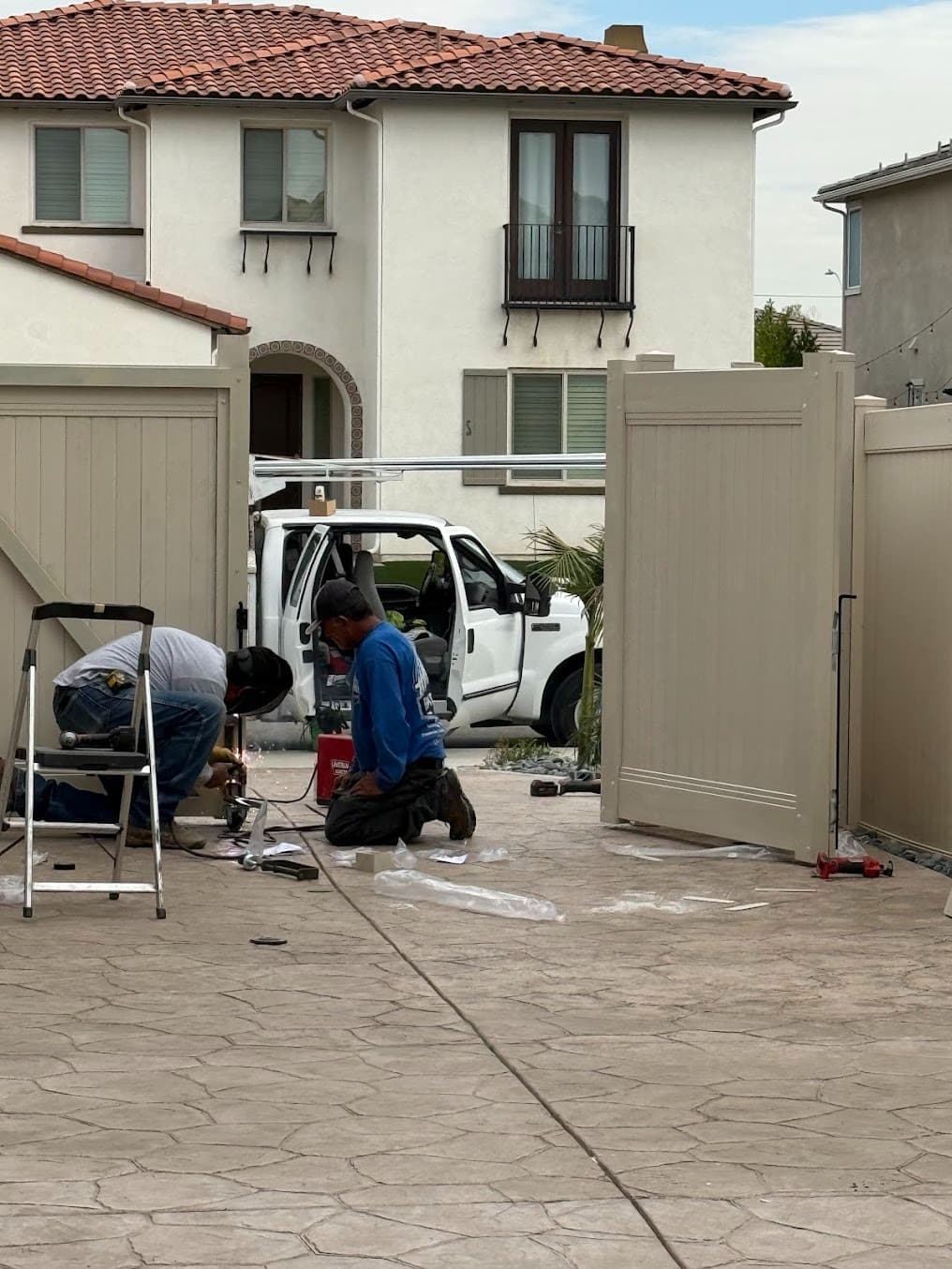
A new fence affects more than the appearance of your property. It can define boundaries, improve privacy, control access, protect children or pets, support business security, and change how you use an outdoor area every day.
The difficulty is that two fence contractors can offer similar-looking estimates while planning very different levels of work. One may account for site conditions, material specifications, gates, property boundaries, and cleanup, while another may leave important details unresolved until installation begins.
Choosing reliable fence installation services means looking beyond the lowest price. A dependable contractor should be willing to explain the proposed work, document the project scope, answer practical questions, and show how the installation will be completed safely and professionally.
Project-Guided by Empire Fence
Trusted fencing guidance that turns confusing material choices, property-line concerns, permits, and installation requirements into clear next steps.
This guide is intended to help homeowners, property managers, and business owners identify project risks early, compare contractors more accurately, and make informed decisions before installing or replacing a residential or commercial fence.
Requirements can differ by property and municipality. Confirm locally applicable boundary, permit, utility, and contractor requirements before work begins.
Quick Answer: What Makes Fence Installation Services Reliable?
Reliable fence installation services are provided by contractors who can verify their credentials, show relevant project experience, explain their installation methods, and provide a detailed written estimate.
They should also identify who handles property-line questions, utility marking, permits, cleanup, and warranty coverage. Clear communication before the project is usually a better sign of reliability than promises made after a deposit has been paid.
At a Glance: Reliable Fence Contractor Checklist
- Verifiable business and contractor information
- Applicable licensing information
- Current insurance documentation
- Examples of comparable completed projects
- A detailed written estimate
- Clearly identified fence materials and hardware
- A realistic project timeline
- Written payment terms
- Material and workmanship warranty information
- A clear plan for property lines, utilities, and permits
- Defined cleanup and final-walkthrough responsibilities
- Straightforward answers without high-pressure sales tactics
A contractor does not become reliable simply by agreeing with everything you request. In some situations, the more responsible answer is to explain why a particular material, height, layout, or gate design may not work well for your property.
Why Choosing a Reliable Fence Contractor Matters
A fence can look good on installation day and still contain problems that become visible later. Weak post setting, poor gate alignment, unsuitable materials, or an incorrectly planned boundary can create avoidable repairs and disagreements.
Reliability matters because the contractor is making decisions that affect the fence's stability, appearance, and daily function.
Poor Installation Can Create Long-Term Problems
A poorly installed fence may begin to lean, sag, or move long before the material itself should fail. Gates may drag, fail to latch, or become difficult to operate when posts move or the opening was not planned correctly.
Other problems may include:
- Uneven fence lines
- Inconsistent panel heights
- Loose hardware
- Insufficient support around gates
- Materials that do not suit the site
- Gaps that compromise privacy or pet containment
- Damage caused by unclear utility responsibilities
- Boundary disagreements
- Debris left after completion
- Repairs that are not covered because warranty terms were never documented
These problems are easier to prevent during planning than to correct after the fence has been installed.
A Complete Quote Protects More Than Your Budget
A detailed quote does more than tell you the price. It shows whether the contractor has thought through the project.
For example, an estimate should make it reasonably clear whether the price includes removing the existing fence, disposing of debris, installing gates, providing hardware, handling difficult access, or completing finish work.
When those details are missing, an initially low price may not represent the final project cost.
What Makes Fence Installation Services Reliable?
A reliable contractor combines technical ability with clear project management. The company should be able to explain what will be built, how it will be built, what it will cost, and what happens if an unexpected condition changes the scope.
The following qualities provide stronger evidence of reliability than advertising claims alone.
Verifiable Licensing and Insurance
Ask whether contractor licensing applies to the project and jurisdiction. When it does, request the information needed to verify that the license is current and appropriate for the work.
You should also ask for current insurance documentation. Do not rely only on a logo, a sentence on a website, or a verbal assurance that the company is insured.
Insurance requirements vary, but the contractor should be able to explain the coverage carried and provide documentation when reasonably requested. Evasive answers should be treated differently from a clear explanation that a particular requirement does not apply locally.
Experience With Your Fence Material and Property
Years in business can be useful, but relevant experience matters more.
A contractor who has installed many basic residential fences may not automatically have the right experience for a large commercial enclosure, an automated gate, difficult terrain, or an unusual material.
Ask for projects involving conditions similar to yours:
- The same fence material
- A similar property type
- Comparable slopes or ground conditions
- Similar privacy or security goals
- A similar gate size
- Comparable vehicle or pedestrian access
- Similar removal or replacement work
For example, fence installation in Ontario, CA may involve property-specific access, municipal requirements, soil conditions, and neighborhood considerations that should be discussed before a final scope is approved.
Local experience does not replace documentation or workmanship, but it can help the contractor anticipate practical issues earlier.
A Detailed Written Fence Installation Estimate
A written estimate should identify enough information for you to understand what is included.
Depending on the project, this may include:
- Approximate fence length
- Fence height
- Material type
- Style or configuration
- Posts
- Panels, pickets, or fabric
- Rails
- Gates
- Hinges, latches, and hardware
- Removal of existing materials
- Site preparation
- Labor
- Permit responsibility
- Utility-marking responsibility
- Cleanup
- Project schedule
- Payment terms
- Warranty information
A single total without an understandable scope is difficult to compare. Two contractors may quote the same length of fence but use different materials, post spacing, hardware, or installation methods.
Clear Explanations of Installation Methods
You should not be expected to become a fence installer before hiring one. The contractor should still be able to explain the proposed approach in ordinary language.
Useful questions include:
- How will the posts be set?
- How will the crew account for slope?
- What supports will be used around gates?
- How will the fence height remain consistent?
- How will changes in grade be handled?
- How will drainage or soil conditions affect the plan?
- How will existing structures or landscaping be protected?
- How will the work area be cleaned?
A trustworthy explanation should be specific enough to be useful without overwhelming you with technical language.
Written Workmanship Warranty Terms
Material warranties and workmanship warranties are not the same.
A manufacturer may cover an eligible material defect while excluding damage caused by incorrect installation. The contractor's workmanship warranty should explain what installation-related problems are covered, how long the coverage lasts, and how a claim should be reported.
Ask for the terms in writing before approving the work. A verbal promise that "we will take care of you" is difficult to evaluate later.
Consistent Communication and Accountability
Reliability becomes visible in small interactions:
- Calls or messages are returned within a reasonable period
- Questions receive clear answers
- Changes are documented
- Appointments are confirmed
- Delays are communicated
- The written scope reflects the discussion
- Responsibility for permits, utilities, and cleanup is not left ambiguous
A contractor does not need to respond instantly at every hour. The important sign is whether communication remains consistent, professional, and documented throughout the decision process.
Reliable Fence Contractor Comparison Table
| What to Check | Reliable Sign | Warning Sign | What to Request | |---|---|---|---| | Business identity | Consistent business name and contact information | Different names or unclear responsibility | Written company information | | Licensing | Clear explanation of applicable requirements | Evasive or contradictory answer | License details where required | | Insurance | Current documentation is available | Verbal assurance only | Insurance certificate or verification | | Experience | Comparable recent projects | Only unrelated or stock images | Project portfolio and references | | Materials | Specific type, style, and components | "Standard materials" without detail | Written material specifications | | Installation | Method explained clearly | "We always do it this way" | Site-specific installation explanation | | Estimate | Itemized and understandable | Vague lump-sum price | Written scope and exclusions | | Timeline | Reasonable schedule with possible delay factors | Unrealistic completion promise | Expected start and completion window | | Payment | Milestone-based written terms | Pressure for excessive upfront payment | Payment schedule | | Warranty | Written coverage and claim process | Verbal guarantee only | Material and workmanship terms | | Property line | Responsibility discussed before work | Assumptions based on an old fence | Survey or boundary-confirmation plan | | Utilities | Responsibility clearly assigned | No discussion before digging | Utility-marking plan | | Cleanup | Included or excluded in writing | Responsibility discussed after installation | Cleanup and disposal terms | | Final review | Walkthrough and gate testing planned | Immediate final-payment demand | Completion checklist |
No single item proves that a contractor is perfect. The overall pattern should show preparation, transparency, and willingness to be held to a written scope.
How to Verify a Fence Contractor's Credentials
Asking whether a contractor is licensed and insured is only the beginning. The answer needs to be verified where those requirements apply.
Check Applicable Licensing Requirements
Fence-contractor requirements vary by state and locality. Some projects may require a particular contractor license, while other locations or project sizes may be treated differently.
Check the appropriate state or local source rather than relying on a general internet statement. Confirm:
- Whether a license is required
- Whether the license is active
- Whether the business name matches
- Whether the classification covers the planned work
- Whether material complaints or disciplinary information are available
Do not assume that the absence of a specific fence license automatically means a contractor is unqualified. The important point is whether the contractor meets the requirements that apply to your project.
Ask for Current Insurance Documentation
Ask what insurance the contractor carries and request current documentation.
Check:
- The named business
- Effective dates
- Type of coverage
- Whether the document appears current
- Whether subcontracted crews are handled appropriately
You may contact the listed insurance provider or agent when further verification is appropriate.
Confirm Who Will Perform the Installation
The salesperson, estimator, and installation crew may not be the same people.
Ask:
- Will employees or subcontractors perform the work?
- Who supervises the crew?
- Who should you contact during installation?
- Who is responsible for correcting incomplete work?
- Does the warranty remain with the company that issued the quote?
Subcontracting is not automatically a problem. Lack of clarity about who is responsible can be.
How to Evaluate Fence Installation Experience
A portfolio should help you evaluate workmanship, not merely provide attractive photographs.
Look for Comparable Completed Projects
Ask to see recent projects involving the material and conditions you are considering.
For a vinyl fence installation, examine whether:
- Panel lines appear consistent
- Posts are properly aligned
- Gates fit the openings
- Hardware is installed cleanly
- Height changes are handled deliberately
- Corners and transitions look planned
- The fence follows the property layout appropriately
A contractor may be capable of several fence types, but examples of the material you intend to purchase give you more relevant evidence.
Examine Posts, Panels, Gates and Finishing Details
A distant photograph may show the overall appearance while hiding important details.
Where possible, look closely at:
- Post alignment
- Panel spacing
- Gate clearance
- Hinge placement
- Latch operation
- Fasteners
- Cut edges
- Transitions
- End posts
- Corners
- Changes in elevation
Ask whether the contractor can explain any unusual detail in the example. A knowledgeable installer should be able to describe why the project was built that way.
Ask How the Contractor Adapts to the Site
Fence projects are not completed on identical, perfectly level lots.
Discuss:
- Slopes
- Soft or difficult ground
- Drainage
- Tree roots
- Concrete areas
- Retaining walls
- Narrow access
- Existing landscaping
- Shared boundaries
- Utility locations
- Driveway gates
- Pool or safety requirements
- Commercial traffic
The contractor should identify issues that affect the scope before installation whenever those conditions are reasonably visible.
How to Read Reviews and Check References
Online reviews are useful, but the average rating does not tell the complete story.
Look for Patterns Instead of Perfect Ratings
Read a selection of recent reviews and look for repeated comments about:
- Communication
- Estimate accuracy
- Scheduling
- Crew professionalism
- Workmanship
- Gate function
- Cleanup
- Responsiveness after completion
- Handling of unexpected problems
A single negative review does not automatically disqualify a contractor. The response can reveal whether the company investigated the concern and communicated professionally.
Repeated complaints involving the same issue deserve more attention than one isolated disagreement.
Ask References Project-Specific Questions
When references are available, ask focused questions:
- Was the completed price consistent with the approved scope?
- Were changes explained and documented?
- Did the crew arrive as expected?
- Did the finished fence match the agreed design?
- Were gates aligned and operating correctly?
- Was the property cleaned after the work?
- Did the contractor respond to concerns?
- Would you hire the company again?
A general question such as "Were you happy?" may produce a polite answer without useful detail.
What a Professional Fence Installation Estimate Should Include
A professional estimate should let you compare scope, not just totals.
Fence Materials, Dimensions and Hardware
The estimate should identify the proposed fence as precisely as practical.
That may include:
- Material
- Style
- Height
- Approximate length
- Post type
- Panel, picket, or mesh specifications
- Rails
- Gates
- Hinges
- Latches
- Decorative elements
- Finish or color
- Special access hardware
When a product has different grades or component options, ask which option is included.
Labor, Preparation, Removal and Cleanup
Confirm whether the estimate covers:
- Site measurements
- Layout
- Removal of an old fence
- Disposal
- Vegetation clearing
- Post-hole preparation
- Concrete
- Installation labor
- Gate installation
- Cleanup
- Hauling debris away
- Restoration of disturbed areas
Do not assume that removal or disposal is included because the new fence occupies the same location.
Timeline, Payment Schedule and Change Orders
The agreement should establish a reasonable project window while recognizing that weather, materials, permits, or hidden site conditions can affect timing.
The payment schedule should identify:
- Deposit amount
- Payment milestones
- When the final balance is due
- Accepted payment methods
- What happens when the scope changes
A change-order process is important. When you request additional work or the crew discovers a condition that could not reasonably be confirmed earlier, the price and schedule change should be documented before the extra work proceeds.
Material and Workmanship Warranties
Ask the contractor to separate:
- Manufacturer coverage
- Contractor workmanship coverage
The written information should explain:
- Length of coverage
- What is covered
- Major exclusions
- Maintenance responsibilities
- How to make a claim
- Who handles the claim
The longest warranty is not automatically the best. Clear and realistic terms are more useful than an impressive duration with broad exclusions.
Questions to Ask a Fence Contractor Before Hiring
Use these questions during an estimate or consultation:
- Does this project require a contractor license, and can I verify yours?
- What insurance coverage do you currently carry?
- Will employees or subcontractors install the fence?
- Who will supervise the work?
- Have you completed projects similar to mine?
- Can I see recent examples using this material?
- Which material grade, posts, and hardware are included?
- How will the posts be set for this property?
- How will you handle the slope or changing ground level?
- Who is responsible for confirming the property line?
- Who arranges underground utility marking?
- Are permits required, and who will obtain them?
- Does the estimate include removal and disposal?
- How many gates are included?
- What could change the quoted price?
- How will change orders be approved?
- What is the expected project schedule?
- What payment schedule do you require?
- What workmanship warranty is included?
- What happens during the final walkthrough?
- When is the final balance due?
- Who should I contact if a problem appears after completion?
A reliable contractor should not be threatened by reasonable questions. The answers should help you understand the project rather than pressure you into making an immediate decision.
Fence Contractor Red Flags You Should Not Ignore
A warning sign does not always prove intentional wrongdoing. It does mean you should slow down, ask for clarification, and avoid committing until the issue is resolved.
Vague or Verbal-Only Estimates
Be cautious when the contractor refuses to provide a written scope or gives only a total with no meaningful description.
A vague estimate makes it difficult to determine:
- Which materials are included
- How many gates are included
- Whether removal is included
- Who handles permits
- Who handles utility marking
- Whether cleanup is included
- What warranty applies
The absence of detail also makes competing estimates impossible to compare fairly.
Pressure to Pay Too Much Upfront
A deposit may be reasonable, particularly when materials must be ordered. However, payment expectations should comply with applicable requirements and be proportionate to the project.
Be cautious when a contractor:
- Demands full payment before beginning
- Requires immediate payment to preserve a verbal price
- Refuses to document the payment schedule
- Requests payment to a different unexplained business or individual
- Pressures you to pay before reviewing the agreement
Do not make a payment until you understand the scope, company identity, and payment terms.
Unclear Materials or Installation Methods
Statements such as "premium fence," "heavy-duty posts," or "professional installation" are too vague to evaluate by themselves.
Ask what those terms mean for your project. The estimate should identify the major materials and components, while the contractor should explain the general installation approach.
No Written Warranty or Completion Process
Do not assume that a contractor will return to resolve a problem because the salesperson was friendly.
Ask what happens when:
- A gate does not close correctly
- A post moves
- A component is missing
- The material arrives damaged
- Cleanup is incomplete
- The completed work differs from the agreement
The contract should explain completion expectations and warranty coverage.
Other Warning Signs
- No consistent business information
- No verifiable local presence or contact method
- Refusal to discuss insurance
- No comparable project examples
- Contradictory answers from different representatives
- Unusually low estimates with no explanation
- No plan for property lines
- No discussion of utilities before digging
- Repeated review complaints about unfinished work
- Refusal to document requested changes
- Pressure to sign before you can review the scope
Trust the full pattern rather than making a decision based on one attractive price or one persuasive conversation.
What a Reliable Fence Installation Process Looks Like
Professional installation begins before the first post hole is dug.
Consultation and Site Evaluation
The contractor should first understand what the fence needs to accomplish.
Common goals include:
- Privacy
- Security
- Pet containment
- Pool safety
- Noise or visual separation
- Decorative improvement
- Business access control
- Equipment protection
- Replacement of a damaged fence
The site visit should consider the proposed layout, measurements, gates, access, terrain, and visible obstacles.
This is also the time to discuss material choices. A responsible recommendation should consider maintenance, durability, appearance, intended use, and site conditions rather than promoting one material for every property.
Property Lines, Utilities and Permits
Responsibility for these items should be clear before work begins.
Property Boundaries
An old fence does not always prove the legal property line. When the boundary is uncertain, discuss whether a current survey or another appropriate verification method is needed.
The fence contractor may follow the markings provided, but the agreement should make clear who is responsible for establishing the boundary.
Underground Utilities
Utility-marking arrangements should be completed before digging begins. Ask who will request the marking and what happens if private lines or unmarked systems may be present.
Permits and Local Rules
Fence height, location, setbacks, visibility near driveways, pool barriers, and permit requirements may vary. Homeowners' associations may also have separate approval procedures.
Clarify who researches, obtains, and pays for required approvals.
Installation, Cleanup and Final Walkthrough
During installation, the crew should follow the agreed layout and material specifications.
Before making the final payment, inspect:
- Overall alignment
- Fence height
- Panel or picket consistency
- Post stability
- Gate swing
- Hinge operation
- Latch operation
- Clearance beneath gates
- Corners and transitions
- Visible material damage
- Loose hardware
- Debris removal
- Areas disturbed during installation
Open and close every gate. Confirm that agreed corrections are completed or documented.
The final walkthrough is also the appropriate time to receive maintenance and warranty information.
Residential and Commercial Fence Projects Require Different Planning
The basic reliability standards remain the same, but the project priorities may differ.
Residential Privacy, Safety and Everyday Access
Homeowners commonly prioritize:
- Backyard privacy
- Pet containment
- Child safety
- Pool protection
- Curb appeal
- Low maintenance
- Neighbor-facing appearance
- Convenient gate access
A residential contractor should ask how the yard is used. The right layout for privacy may not provide the best gate access, and a pet-containment fence may require attention to ground gaps or latch placement.
Commercial Security, Traffic and Gate Requirements
Commercial projects may involve:
- Vehicle access
- Pedestrian control
- Security
- Service entrances
- Equipment areas
- Employee access
- Delivery routes
- Parking areas
- High-use gates
- Business-hour restrictions
A reliable commercial contractor should consider how installation will affect operations and whether gates, hardware, and access points are suitable for expected use.
The lowest-cost residential-style solution may not perform well in a high-traffic commercial setting.
Final Checklist for Choosing a Fence Installation Company
Before signing, confirm that you can answer yes to the following questions:
- Do I know exactly which company will perform the work?
- Have applicable licensing and insurance details been addressed?
- Has the contractor completed comparable projects?
- Does the estimate identify the main materials and project scope?
- Are property-line, utility, and permit responsibilities clear?
- Is the payment schedule written and understandable?
- Are cleanup and disposal addressed?
- Are material and workmanship warranties explained?
- Do I know how changes will be approved?
- Is there a final-walkthrough process?
- Have I compared scope and quality rather than price alone?
- Do I feel comfortable asking the contractor difficult questions?
If several answers remain unclear, resolve them before authorizing the project.
Frequently Asked Questions
How do I know whether a fence contractor is reliable?
A reliable fence contractor should provide verifiable business information, applicable credentials, insurance documentation, relevant project examples, and a detailed written estimate.
The contractor should also explain the installation method, property-line responsibilities, utility marking, payment schedule, cleanup, and warranty terms. Reliability is demonstrated through consistent documentation and communication, not merely claimed in advertising.
Should a fence contractor be licensed and insured?
A fence contractor should meet the licensing and insurance requirements that apply to the project and location.
Because requirements vary, verify them through the appropriate state or local source. Ask the contractor for current documentation and confirm that the business name and coverage information are consistent.
What should a fence installation estimate include?
A fence installation estimate should identify the proposed material, style, height, approximate length, gates, major hardware, labor, and relevant preparation.
It should also clarify removal, disposal, permits, utility marking, cleanup, timeline, payment terms, and warranties. The estimate should be detailed enough to compare with another contractor's scope.
Is the cheapest fence estimate usually the best?
Not necessarily. A lower estimate may reflect an efficient contractor, but it may also exclude removal, cleanup, gates, permits, higher-grade materials, or important installation work.
Compare the complete scope, material specifications, installation approach, warranty, and contractor reliability before comparing the final totals.
What warranty should a fence contractor provide?
Ask about both the manufacturer's material warranty and the contractor's workmanship warranty.
The workmanship warranty should explain which installation-related problems are covered, how long coverage lasts, what is excluded, and how to request service. Terms should be provided in writing.
When should the final fence payment be made?
The timing should follow the written agreement and applicable local requirements.
Before releasing the final balance, complete the walkthrough, test all gates, inspect the visible work, and confirm that cleanup and agreed corrections have been completed or formally documented.
Plan Your Fence Project With Greater Confidence
A dependable fence contractor should make the project easier to understand before asking you to approve it.
Look for clear documentation, relevant experience, thoughtful site evaluation, material transparency, and a willingness to explain how the fence will be installed. These qualities give you a stronger basis for comparing contractors and reduce the chance that important decisions will be postponed until work has already started.
Empire Fence helps property owners evaluate residential and commercial fencing needs, compare suitable materials, and plan installation around the property's privacy, security, access, and appearance requirements.
Contact us to get a project estimate and discuss the fence layout, materials, gates, site conditions, and installation expectations for your property.